
Social Media Influencers Legal Handbook

Introduction Social media is not just about the likes and follows; it’s also about playing it safe and legal in this digital playground. In India. There are no specific laws exclusively designed for them but there are some key aspects that apply to social media influencers Regulation for influencers in india Under Consumer Protection Act, 2019, influencers need to ensure transparency in promotional content. Misleading advertisements or fibbing about products might just lead to a soup of penalties on both manufacturers and endorsers up to a fine of 10 to 50 lakhs. Advertising Standards Council Of India (ASCI) Guidelines covers various aspects of advertising ethics and standards to maintain honesty and fairness in advertising endorsements. Section 499(defamation),292(obscenity) and 505 (spreading false statements) are prohibited under Indian Penal Code. Influencers need to avoid posting content that might incite hatred or cause harm to any individual or group. Section 66(a) of IT Act,2000 prohibits and provides punishment for any offence which is committed via social media to hurt or cause injury to others. Information Technology (Intermediary Guidelines and Digital Media Ethics Code) Rules, 2021 ensures swift content takedown when necessary and imposes obligations on social media intermediaries and users to follow a code of ethics and to prevent the spread of misinformation. So think twice before hitting that post button. Social media Influencers need to respect copyright laws as using someone else’s content without permission can lead to legal issues under Section 51(infringement of copyright),63 (penalties and 66 (criminal remedies for infringement) of Copyright Act,1957. Now, when influencers cozy up to brands for those sweet endorsements, they’re stepping into the world of contracts. Understanding and playing by the rules of these contracts under the Indian Contract Act of 1872 is as crucial as knowing your best selfie angle. Influencers must clearly disclose paid promotions or sponsored content. Failure to disclose endorsements can lead to penalties. Conclusion By following these guidelines, Influencers not only protect themselves from legal repercussions but also build trust with their audience. Done By: V. Madhumitha, 5th year B.A, LL.B(Hons.) SRM University, Kattangulathur For Origin Law Labs
Single And Supported: Unveiling Legal Maintenance For Unmarried Women In India
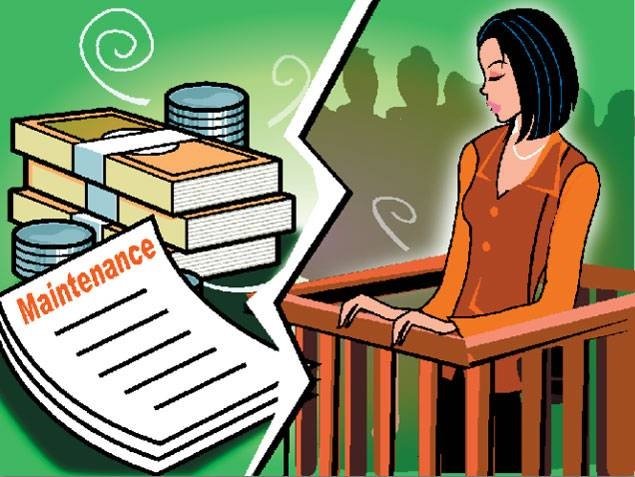
Exploring Maintenance Rights: In the view of Indian law, there are provisions supporting unmarried women to seek maintenance such as; Section 20 of Hindu Adoption and Maintenance Act, 1956 allows unmarried daughters to claim maintenance from their fathers if they are unable to maintain themselves. Concurrently, Section 20 of The Protection of Women from Domestic Violence Act,2005 allows unmarried women to claim maintenance who face domestic violence Evolving notions of “wife” The word “wife” includes a woman who has been divorced by, or has obtained a divorce from, her husband and has not remarried according to Section 125 of Code of Criminal Procedure,1973. Similarly, the Chanmuniya v. Virendra Kumar Singh Kushwaha and another (2011) 1 SCC, 141 2011 expanded the definition of ‘wife’ under section 125 of Crpc to include women in live-in relationships. But as things are not simple in the legal world, in D.Velusamy vs D.Patchaiammal (2010) 10 SCC 469, the court created a checklist for a woman in a live-in relationship to claim maintenance highlighting acknowledgement within society:- (a)The couple must publicly represent themselves as being like spouses in society. (b)They need to be of the legal age required for marriage. (c)They must fulfil the prerequisites for a legal marriage, including being unmarried. (d)They should have lived together by choice and represented themselves to the world as a couple similar to spouses for a significant period. The sentence provided in Section 125 as “unable to maintain herself” is not about waiting for someone to hit rock bottom. If the husband is providing some money to his wife but it’s not enough to cover her essential needs, it undoubtedly falls under the category of refusing to support the wife or neglecting. As per a Supreme Court ruling, when maintenance is paid monthly, its typically set at 25% of the husband’s total monthly salary If the wife earns well, her income is considered along with the husband’s and the court decides maintenance based on those earnings, taking in relevant factors These may vary from case to case. Conclusion Through these above judgements we can see that the courts have been on a quest to define and redefine the term “wife” to corroborate fairness for everyone involved, especially for unmarried women to request financial support or sustenance. Done By: V. Madhumitha, 5th year B.A, LL.B(Hons.) SRM University, Kattangulathur For Origin Law Labs
Uttarkashi Tunnel Laborers: A Legal Imperative For Workers Safety

The construction of tunnels in Uttarkashi has become a focal point for addressing critical concerns regarding the safety and well-being of labourers. As these workers toil to create essential infrastructure, the legal landscape plays a pivotal role in ensuring their safety and protecting their rights. Legal Framework: India’s labour laws, encompassing statutes such as the Factories Act, 1948, and the Building and Other Construction Workers (Regulation of Employment and Conditions of Service) Act, 1996, are designed to safeguard the rights of labourers. The Factories Act outlines provisions related to working conditions, hours of work, and safety measures, while the Construction Workers Act specifically addresses the welfare of labourers in the construction industry. Safety Regulations: Ensuring workers’ safety during tunnel construction involves adherence to safety regulations mandated by these legal frameworks. Protective gear, safe working conditions, and measures to prevent accidents are paramount. Employers are obligated to provide a secure environment, implement safety protocols, and conduct regular inspections to identify and rectify potential hazards. Compensation and Insurance: In the unfortunate event of accidents or injuries, labourers are entitled to compensation and insurance benefits as per legal provisions. The Employees’ Compensation Act, 1923, establishes the right of workers to seek compensation from employers for work-related injuries, ensuring financial support in times of need. Role of Regulatory Authorities: Government bodies such as the Labour Department and regulatory authorities play a crucial role in overseeing and enforcing safety standards. Regular inspections, awareness campaigns, and stringent penalties for non-compliance are essential components of their responsibilities. Challenges and Advocacy: Despite existing legal safeguards, challenges persist. Advocacy for the rights and safety of tunnel labourers involves raising awareness, ensuring proper implementation of laws, and addressing gaps in the system. NGOs, labour unions, and legal professionals play vital roles in advocating for improved safety standards and the enforcement of existing regulations. In conclusion, the legal framework governing worker’s safety in Uttarkashi’s tunnel construction is fundamental for ensuring the well-being of labourers. Adherence to existing labour laws, safety regulations, and the proactive role of regulatory bodies are essential elements.
Unpaid Seller

An unpaid seller refers to a party in a sales transaction who has delivered goods to the buyer but has not received the agreed-upon payment or the price for the goods. According to Section 45 of the Sales of Goods Act,1930, an unpaid seller is characterised as a seller who has not received the complete payment or a portion thereof for the goods. This category extends to individuals acting as sellers, such as agents or consignors. In the landmark case Liverpool City Council vs Irwin(1976 3 AIR ER 531) addresses the statutory rights of the unpaid seller. The unpaid seller, as defined in the Sale of Goods Act, possesses several rights until full payment is received for the goods. These rights safeguard the interests of the seller in commercial transactions: 1. Right of Lien: Definition: The unpaid seller has the right to retain possession of the goods until the full payment is made. Conditions: The goods must be in the possession of the unpaid seller, and the right of lien is not waived. 2. Right of Stoppage in Transit: Definition: If the buyer is insolvent, the unpaid seller can stop the goods in transit and resume possession. Conditions: The goods must be in transit, and the seller must have relinquished possession but not ownership. 3. Right of Resale: Definition: In case of buyer’s breach, the unpaid seller may resell the goods and hold the defaulting buyer accountable for losses. Conditions: Resale must occur after reasonable notice to the buyer, the goods must be in possession, and notice may be required by the contract. 4. Suing for Price: Legal Action: The unpaid seller can initiate legal action to recover the unpaid amount. 5. Damages for Non-Acceptance: Compensation: The seller can claim compensatory damages for the buyer’s refusal to accept the goods. 6. Claiming Interest: Interest: The unpaid seller has the right to claim interest on the unpaid amount as per legal provisions. These rights provide a legal framework for the unpaid seller to seek remedies and protect their interests in the event of non-payment or breach of contract by the buyer. In conclusion, the rights of the unpaid seller, as defined by the legal statutes and reinforced through landmark judgement, play a crucial role in maintaining equilibrium in commercial transactions. This jurisprudence not only ensures fairness but also establishes a foundation for the continued integrity of contractual agreements in the complex landscapes of business dealings. Done By: Reshma A, 5th year B.Com.,LL.B(Hons.) SRM University, Kattangulathur For Origin Law Labs
Right To Sleep – Is This Like A Dream Come True Or What?

Sleeping? We all love. But waking up due to loud noises, we really hate it. But did you know “Right to sleep” is considered as a fundamental right in India. Every citizen is entitled under Right to Life and Personal Liberty – Article 21 of the constitution to sleep peacefully with no disturbance. In the Sayeed Maqsood Ali v. State of M.P (AIR 2001 MP 220) case, Justice Dipak Misra emphasised that every citizen is entitled, as per Article 21, to live in a decent environment and enjoy peaceful sleep A pivotal moment occurred in 2011 during the Ramlila Maiden vs Union of India case (NO. 122 OF 2011). The Supreme Court asserted that depriving an individual of sleep is tantamount to a tortious act. The case Ramlila Maiden vs Union of India case (NO. 122 OF 2011) involved Suo Moto action against police brutality on individuals sleeping at Ramlila Maidan during a yoga training camp organised by Baba Ramdev. Baba Ramdev started a hunger strike against corruption with over 50000 people. Considering the strike was not called-off, people were sleeping in unity. At midnight around 12am, the police’s lathi charge resulted in casualties, burns, and injuries, leading the court to declare it a violation of the right to peaceful assembly, freedom of speech and expression, and notably, the right to sleep under Article 21. Despite not explicitly mentioned in the Constitution, the right to sleep is inferred as a part of the Fundamental Right to life. The judicial pronouncements discussed indicate that constitutional protections against the infringement of the right to life can be invoked in cases of deprivation of the right to sleep. Done By: Reshma A, 5th year B.Com.,LL.B(Hons.) SRM University, Kattangulathur For Origin Law Labs
Novation- “Swap And Seal

Novation is the replacement of any one party in an agreement between two parties, with the consent of all three parties involved. In simple terms, novation is like giving your friend permission to take your place in a deal. Imagine you promised to mow your neighbour’s lawn for some money, but you can’t do it. With novation, your neighbour agrees that your friend can mow the lawn instead, and your friend gets the money you were supposed to get. It’s like swapping in a new person, with everyone’s approval, so the original promise still holds but with someone else doing the job. Section 62 is rooted in the concept that those who initiate something can also bring it to an end. Under Section 62 of the Indian Contract Act, 1872, it is affirmed that when parties involved in a contract wish to terminate it, they have the option to either substitute a new contract for the existing one, rescind it, or make alterations. In the case of Scarf v. Jardine (1882), Lord Selborne provided a detailed explanation of novation, emphasising that it occurs when a new contract replaces an already existing one, regardless of whether it involves the same parties or different ones. The crucial aspect is that the new contract takes precedence, leading to the discharge of the old contract. Lord Selborne illustrates the concept of novation in the dissolution of a partnership firm. Elements of Novation: All parties involved must mutually agreeto the novation. There must be a clear intention among the parties to discharge the original contractual obligations Every party affected by the novation must expressly agree to the substitution. The original contract is fully dischargedor terminated through novation Who should sign a novation agreement? Original Parties Incoming parties (New Party) Any third Parties affected. When can parties usually opt for Novation? Change in Business Ownership Restructuring Agreements Dissolution of Partnership Transfer of Liabilities Changing Terms and Conditions Dealing in securities in financial markets In the case Dadri Cement Co v. Bird and Co (P) Ltd (1974), a property sale contract existed, and the parties aimed to create a new arrangement by substituting the existing agreement, deed of pledge, and power of attorney. The substitution facilitated the replacement of the old arrangement with the new one. The central issue raised was whether this substitution constituted novation. The Delhi High Court concluded that indeed, this action constituted novation. Consequently, the prior arrangement became ineffective, and the original contract was no longer enforceable. In summary, novation serves a crucial legal tool, allowing parties to substitute or alter contracts with mutual consent. Whether through explicit or implied actions, novation enables the creation of new agreements, facilitating adaptability in contractual relationships. Done By: Reshma A, 5th year B.Com., LL.B(Hons.) SRM University, Kattangulathur For Origin Law Labs
Limitations Of Judicial Review – Judicial Boundaries.

Judicial review is integral to any democratic society, involving courts evaluating the constitutionality of government actions. The limitations on judicial review define the boundaries of the court’s power to scrutinize legislative or executive actions. The Doctrine of judicial review was established in the case of Marbury v. Madison. This case asserted that American courts possess the authority to invalidate government actions or laws that contravene the constitutional provisions of the American Constitution. Concept of Judicial Review was introduced in the case Marbury v Madison, which established the Doctrine of Judicial Review by saying that American courts have the power to brings down the actions, laws made by the government if that violates the Constitutional Provisions of the American Constitution. The origins of judicial review in India were adopted from the American legal system. This power is embodied in Article 13, 32 and 226 of the Indian constitution. The power of judicial review was initially affirmed by the Supreme Court in Shankari Prasad v. Union of India (1951 AIR 458, 1952 SCR 89), asserting no constitutional limits on Parliament’s amending power. However, Kesavananda Bharati v. State of Kerala (1973)4SCC225) established limits, safeguarding the Constitution’s basic structure.Though judicial review is a powerful tool, it has constraints. The Apex court in L. Chandra Kumar v. Union of India (1995 AIR 1151, 1995 SCC (1) 400), has made limitations in the power of review judicially provided under the constitution. – The judiciary avoids getting involved in matters that are considered “political questions.” – If a policy may be unwise or controversial, the courts won’t interfere unless it is in violation of the constitution. Courts only examine the legality and constitutionality of these policies and don’t review the wisdom of government policy decisions. – Remedies under Articles 32 and 226 must be sought within a reasonable time, and delays without persuasive reasons lead to the court declining jurisdiction in cases of negligence. These limitations aim to balance power among government branches and uphold the separation of powers, emphasising the need for equilibrium between judicial review and the responsibilities of other branches. Done By: Reshma A, 5th year B.Com.,LL.B(Hons.) SRM University, Kattangulathur For Origin Law Labs
Contractual Marriages In India

Marriages based on contracts are not acknowledged as legally valid in India. The country follows a system where marriage is predominantly regulated by personal laws tied to one’s religious beliefs, and the notion of a contractual marriage lacks recognition within the established legal framework. A contractual marriage involves a marital arrangement in which partners create a private contract outlining the terms and conditions of their union. This contractual agreement can encompass elements like property rights, financial agreements, and the intended duration of marriages. Are contractual marriages legal in India? In India, the legal system does not acknowledge contractual marriages. The country’s marriage regulations are chiefly guided by personal laws associated with one’s religion or, in instance of interfaith or secular marriages, by special Marriages Act of 1954. These legal provisions do not accommodate or validate contractual marriages. Instead, they mandate adherence to conventional marriage ceremonies and established legal procedures. There were no specific case laws related to contractual marriage in India. But there are cases related to aspects of marriage, including disputes or nullification of marriages such as V. Revathi v. Union of India (1988) 1988 AIR 835, 1988 SCR (3) 73 which discusses the validity of marriage contract In summary, contractual marriages lack legal regal recognition in India, where marriage is primarily governed by personal laws based on religion or the Special Marriage Act for interfaith unions. The prevailing legal frameworks emphasise adherence to traditional rituals and established procedures, highlighting the non-existence of a legal framework for contractual marriages in the country. The perception of contractual marriages varies among individuals. Some view them as practical tools for clarifying financial expectations protecting individual interests, while others may have concerns about how such agreements impact the emotional aspects of life. The opinions are subjective and depend on individual values and perspective. Done By: Reshma A, 5th year B.Com.,LL.B(Hons.) SRM University, Kattangulathur For Origin Law Labs