The Yes Bank Scam 2020
Financial fraud has long captivated the attention of the Indian public. The widespread interest is evident in the popularity of television series like “Scam 1992.” While these scams may be intriguing, their real-world consequences are grave, negatively impacting the economy and causing distress to countless individuals. Examining the events leading up to the YES Bank scam provides insight into the severity of such occurrences. Events Leading to The Scam Established on November 21, 2003, YES Bank was founded by Rana Kapoor, Ashok Kapur, and Harkirat Singh. However, Singh left early on, and tragically, Ashok Kapoor’s life ended during the 26/11 attacks, leaving Rana Kapoor as the sole remaining founder. Initially, YES Bank thrived and became the fourth largest private bank in India. The bank played a pivotal role in facilitating 35% of UPI transactions nationwide and served as the exclusive banking partner for major companies like PhonPe, Bharat Pay, Flipkart, Swiggy, and Red Bus. However, despite its early success, YES Bank began facing challenges. YES Bank earned a reputation for extending substantial loans to high-risk entities at exorbitant interest rates, a practice uncommon among other banks. Despite the inherent risks in this lending behaviour, the bank experienced significant growth. In 2015, global financial services firm UBS highlighted YES Bank’s higher share of loan approvals to potentially stressed companies compared to other private and public sector firms. The Reserve Bank of India (RBI) took notice, initiating monitoring in 2017, ultimately discovering that YES Bank had concealed a staggering five times more Non-Performing Assets (NPAs) than disclosed to the government. While this was the first irregularity noticed by the RBI, unfortunately it was just the tip of the iceberg. Leadership Changes In August 2018, the RBI ordered that Rana Kapoor would have to vacate the chair of the CEO by January 31, 2019, when it emerged that he could be the real problem of banking governance and source of bad loan practices. After a brief intermediary period, RBI appointed Ravneet Gill as the CEO of YES Bank, who later disclosed that there had been large under-reported stressed assets in the YES Bank. Consequently, the YES Bank reported its maiden loss in the March 2019 quarter after which its stock fell by 30%. Rana Kapoor sold his entire stake in the bank in November 2019 worth 142 crores, when the YES Bank had turned completely unbankable. RBI Moratorium and Arrest: The situation escalated on March 5, 2020, when the RBI imposed a moratorium, limiting withdrawals to 50,000 rupees per month for depositors, except in emergency cases. This move triggered a further decline in YES Bank’s stock and impacted the broader market, as reflected in the Sensex drop. Subsequently, on March 8, 2020, Rana Kapoor faced arrest by the Enforcement Directorate on charges of fraud and money laundering. The accusations included approving dubious loans exceeding Rs 30,000 crore for multiple corporate entities, resulting in Rs 20,000 crore becoming non-performing assets, allegedly in exchange for bribes directed to his wife and daughters’ accounts. Conclusion: The YES Bank scam has been described as the “case that rocked the Indian banking system”. From risky lending practices to concealed NPAs and leadership changes, the events leading to the bank’s downfall the story of yes bank serves as a cautionary tale and underscore the importance of regulatory oversight and ethical banking practices to safeguard the financial system and protect stakeholders from the devastating aftermath of such scams. Done By: Adithya Menon, 5th year B.A, LL.B(Hons.) Veltech School of Law, Chennai For Origin Law Labs
What Is The Difference Between Gambling And Online Skill-Based Gaming Industry

At first glance, gambling and online skill-based gaming might look alike, as they both provide entertainment and a chance to earn money. However, they have distinct characteristics that set them apart. Gambling and online skill-based gaming both require a combination of chance and skill, appealing to different types of players and following different regulations. As technology makes it harder to tell chance and skill apart, it’s important to know what makes traditional gambling different from online skill-based gaming. Legal Status of Gambling in India State laws regulate gambling in India, and states have the authority to formulate their own laws for gambling activities within their respective territories according to Clause 34 of the Seventh Schedule of Schedule II (List of States) of the Constitution of India, 1950 Most states in India, except Goa, Daman and Diu and Sikkim, have banned all kinds of gambling, betting and wagering activities. The Public Gambling Act, 1867 is a Central legislation that regulates these activities and has been adopted by some states like Uttar Pradesh, Uttarakhand, Madhya Pradesh, Haryana, Manipur and Punjab with slight changes. The majority of state gaming act are based on this Act. The only game of chance or probability allowed by the Public Gambling Act, 1867 is the lottery. Distinctions Between Gambling and Skill-Based Gaming According to Law Gambling and skill-based gaming represent distinct activities involving the wagering of money or other rewards. Gambling relies on chance, with outcomes determined by random events beyond players’ control, while skill-based gaming hinges on the abilities, knowledge, and strategies employed by the players. According to Section 12 of the Public Gambling Act, games of skill are not classified as gambling and are exempt from legal restrictions against gambling in India. The legal distinction between games of skill and chance has been clarified through various judicial decisions. In the case of State of Andhra Pradesh v. K Satyanarayana, AIR 1968 SC 825, the Supreme Court determined that the thirteen-card game of rummy qualifies as a game of skill, permitting its play in clubs that do not profit from the stakes involved. However, this exception does not apply in Assam and Orissa, where any game for money, regardless of its dependence on skill or chance, is prohibited under the Assam Game and Betting Act, 1970, and the Orissa Prevention of Gambling Act, 1955, respectively. Online skill-based gaming, a variant conducted on digital platforms, requires players to showcase cognitive and physical abilities, strategic thinking, and in-depth knowledge. Such games often involve a participation fee and encompass diverse genres like fantasy sports (e.g., Dream11 and MPL fantasy cricket), casual games, and card games such as rummy or poker. In contrast, online gambling is characterised by chance or luck, with unpredictable outcomes independent of the players’ skills. Regulations Governing Online Skill-Based Gaming The regulatory landscape for India’s online gaming industry involves the Public Gambling Act, 1867, the Prize Competitions Act, 1955, and the Information Technology Act, 2000 at the federal level. However, varying state legislations take precedence over these acts. While there is currently no uniform federal law for skill gaming, online gaming is generally legal in India. Most states permit real money or stakes-based online gaming, with exceptions in Sikkim and Nagaland, where skill games require licences under their respective acts. In December 2022, the Central Government designated the Ministry of Electronics and Information Technology (“MeitY”) as the primary ministry for matters related to online gaming. MeitY subsequently released draft changes to the IT Rules 2021 for online gaming on January 2, 2023, seeking public input. Based on feedback, MeitY issued the Online Gaming Rules as part of the IT Rules 2021 on April 6, 2023. These rules aim to regulate the online gaming industry uniformly, provide clarity, and enhance consumer protection. Ethical Concerns Surrounding the Online Skill-Based Gaming Industry Online gaming poses several ethical challenges that need to be addressed by the relevant stakeholders. Online games like rummy, poker, and fantasy sports, can lead to harmful outcomes such as addiction and mental health problems, financial losses and fraud, and security and privacy threats. Done By: Adithya Menon, 5th year B.A, LL.B(Hons.) Veltech School of Law, Chennai For Origin Law Labs
Challenges In Safeguarding The Right To Life For Undertrial Prisoners In India

“A society should be judged not by how it treats its outstanding citizens but by how it treats its criminals.” – Fyodor Dostoevsky The plight of undertrial prisoners in India raises crucial concerns regarding their right to a fair trial and the right to life. According to The Model Prison Manual 2016, An under-trial prisoner is defined as a person who has been committed to judicial custody pending investigation or trial by a competent authority. Shockingly, the Prison Statistics India 2022 report reveals that 75.8% of the total prisoner population in India comprises undertrial inmates. Challenges Faced by Undertrial Prisoners The slow, ineffective, and unfair legal procedures result in extended detentions for undertrial prisoners. This infringes upon the fundamental right to life and liberty as outlined in Article 21 of the Indian Constitution. The excessive reliance on undertrial detention has wide-ranging effects, impacting physical and mental well-being, familial and social connections, economic and educational prospects, and access to legal assistance and justice. Moreover, it erodes the principle of the presumption of innocence. Legal Safeguards and Judicial Pronouncements The 2005 amendment to the Code of Criminal Procedure introduced Section 436A, allowing the release of undertrial prisoners who have served half of the maximum sentence for their alleged offence. In the case of T.V. Vatheeswaran v. State of Tamil Nadu (1983) 2 SCC 68, the Hon’ble Supreme Court emphasised that fundamental rights under Articles 14, 19 and 21 of the Constitution of India are available to the prisoners as well as freemen. In the case of State of A.P. Vs. Challa Ramkrishna Reddy & Ors. (2000) 5 SCC 712, the Supreme Court asserted held that a prisoner is entitled to all his fundamental rights unless his liberty has been constitutionally curtailed. The Madras High Court in Jagannath v. The State 1983 CriLJ 1748 made the rule that such undertrial prisoners would be released against whom chargesheets have not been filed within the limitation period provided violative of their fundamental right under Article 21. While under-trial prisoners share facilities with convicted inmates in Indian Prisons, The Model Prison Manual 2016 provides that no convicted prisoner shall be kept in the same area in which under-trial prisoners are kept, or be allowed to have contact with under-trial prisoners. No convicted prisoner shall be allowed to enter the under-trial yard or block. Done By: Adithya Menon, 5th year B.A, LL.B(Hons.) Veltech School of Law, Chennai For Origin Law Labs
Is Buying Peacock Feathers Illegal In India?
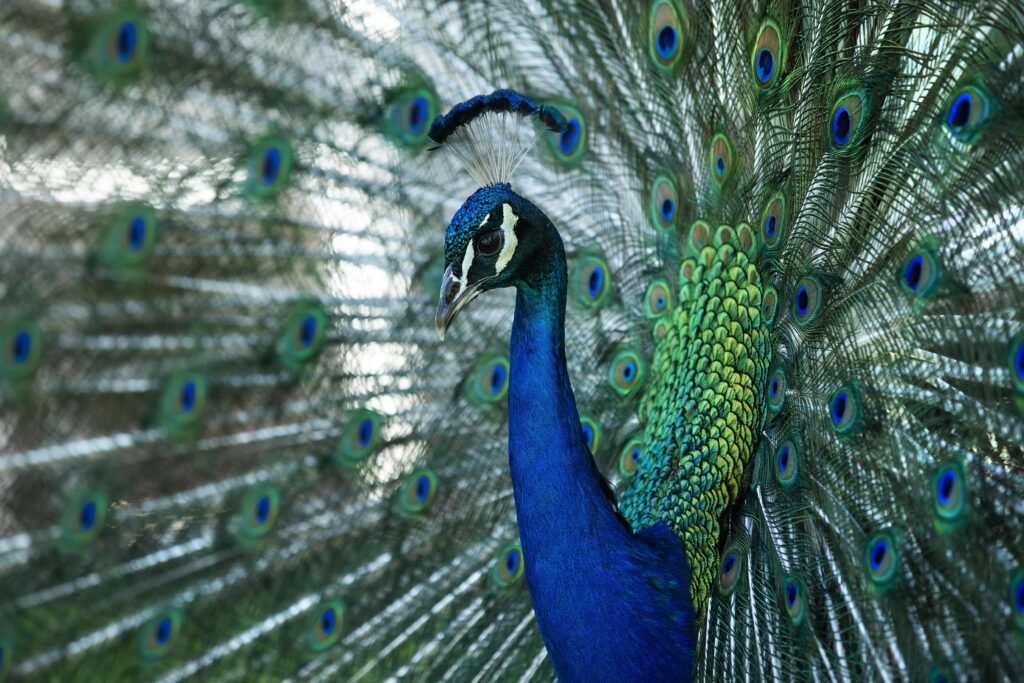
Peacock feathers are regarded as an auspicious symbol in many cultures, especially in Hinduism. They are often used in religious ceremonies to bring good luck, purity, and prosperity. They are also used in traditional art and clothing, such as in Indian paintings, embroidery, and jewellery. In India, it’s a common sight to see street vendors selling peacock feathers. The temptation to purchase these feathers may be strong, and some of us might even have them at home. However, what many may not realise is that these feathers may be obtained illegally Legal Status Declared as the national bird in 1963, the peacock is safeguarded under Schedule I of The Indian Wildlife (Protection) Act, 1972. This law explicitly forbids the killing of peacocks, imposing severe penalties, including imprisonment for up to seven years and a fine not less than ten thousand rupees, as outlined in Section 51(1-A). While killing peacocks is undeniably against the law, an interesting legal loophole arises when it comes to trading the naturally shed feathers. Exploiting this gap, some traders contribute to an illicit trade by obtaining feathers through questionable means, often involving harm to India’s national bird. Impact of illegal trade on peafowl population The only stock-taking of India’s peacock population was conducted by the World Wide Fund for Nature in 1991, revealing a concerning reality. At that time, the country only retained 50% of the total peacock population from the Independence era. Government officials and animal activists believe it number has come down further since 1991 because of habitat loss and poaching. Controversies While the government has proposed many times the blanket ban on the sale of peacock feathers, The Digambar Jain community has strongly objected to the government’s proposal. The Digambar Jain Munis, who give up all worldly belongings, only carry a Kamandalu and a Pichchi, a small broom made of peacock feathers that they use to clean the place where they sit. The Pichchi represents non-violence and they say that the feathers are collected from those that fall naturally. Buying peacock feathers can be problematic, as they might come from illegal sources. To avoid any trouble and respect the law, it is advisable not to buy peacock feathers that are unlawfully acquired. Done By: Adithya Menon, 5th year B.A, LL.B(Hons.) Veltech School of Law, Chennai For Origin Law Labs
Legally Speaking, Do Dress Code Restrictions Outweigh The Right To Clothing?

The recent incident involving a man from Tamil Nadu being denied entry to Virat Kohli’s Mumbai restaurant, One8 Commune, has ignited a debate on the relevance and legality of dress codes in restaurants and clubs. The individual asserted that he was denied entry due to his attire, specifically a veshti—a traditional garment significant in Tamil culture. The video of the incident went viral, capturing the man’s disappointment as he expressed his dismay at being barred from the establishment. This provides an opportunity for a closer examination of the legal dimensions surrounding the right to clothing and access to public establishments. Right To Clothing Internationally, the right to clothing is recognized as a fundamental human right, aligning with the broader entitlement to an adequate standard of living, as articulated in Article 11 of the International Covenant on Economic, Social and Cultural Rights. Similarly, Article 25 of the Universal Declaration of Human Rights explicitly acknowledges the right to clothing. Furthermore, freedom of clothing is an integral facet of the freedom of expression, a paramount citizen right protected under Article 19 (1) (a) of the Constitution. Article 15(2) of the Indian Constitution states that (2) No citizen shall, on grounds only of religion, race, caste, sex, place of birth or any of them, be subject to any disability, liability, restriction or condition with regard to (a) access to shops, public restaurants, hotels and palaces of public entertainment; or (b) the use of wells, tanks, bathing ghats, roads and places of public resort maintained wholly or partly out of State funds or dedicated to the use of the general public Right To Refuse Service However, one has to consider the fact that private establishments like One8 Commune inherently possess the right to regulate admission and service. Like all private spaces, they reserve the right to refuse admission and service for any reason that isn’t otherwise prohibited by law. They can refuse service for reasons such as not adhering to the dress code, using offensive language, or having subpar hygiene. However, they cannot refuse service based on race, colour, religion, sex, or national origin. It is not uncommon for restaurants, clubs, and bars in India to enforce stringent dress codes or deny entry based on attire. Renowned artist MF Husain faced exclusion from Mumbai’s Willingdon Club in 1988 for being barefooted. The Entry into Public Places (Removal of Restriction on Dress) Bill, 2014 In 2014, Justice D Hariparanthaman of the Madras High Court, alongside two senior advocates, encountered a similar situation at the Tamil Nadu Cricket Association due to their traditional south Indian dhotis. The 2014 incident led to the passing of The Entry into Public Places (Removal of Restriction on Dress) Bill, 2014, aimed at removing restrictions on traditional Indian attire in public spaces. The legislation in Tamil Nadu explicitly prohibits the imposition of dress code restrictions for entry into public places, including recreation clubs, hotels, theatres, malls, halls, auditoriums, stadiums, and other venues notified by the government. If such an incident had occurred in Tamil Nadu instead of Mumbai, it would have constituted a cognizable offence. Violators of the act would face penal action, including the potential cancellation of licences after notice. Additionally, individuals found in violation could be subject to imprisonment for a term extending up to one year and a fine of up to Rs 25,000. However, except for this specific act, legislation and constitutional provisions do not explicitly prohibit the refusal of service based on cultural or traditional garments. Done By: Adithya Menon, 5th year B.A, LL.B(Hons.) Veltech School of Law, Chennai For Origin Law Labs
Laws On Cryptocurrency In India
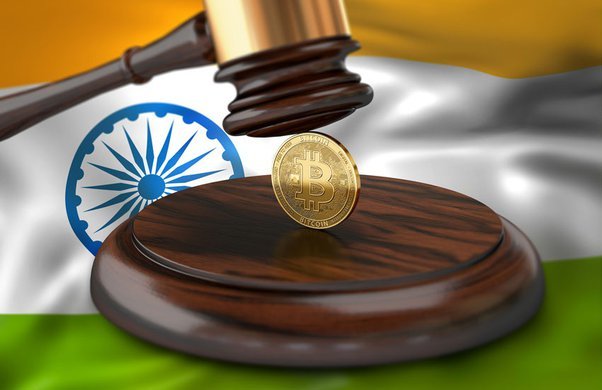
Cryptocurrency is a digital currency that uses encryption to secure transactions and verify them on a public ledger. It is independent of any government or bank control and is created and managed by a decentralised system of users who use a special system called blockchain to keep track of all the transactions and make sure they are secure. Cryptocurrency is a highly debated and controversial topic in India and its legal status is like a riddle without a clear answer. Currently, there is no specific law or regulation that governs the use or trade of cryptocurrency in India. Overview Of Cryptocurrency Regulations in India 2018: The RBI banned banks and other financial institutions from dealing with cryptocurrencies. 2019: An inter-ministerial committee (IMC) set up by the government of India submitted a draft bill to ban cryptocurrencies in India. The draft bill said that only the RBI or the government could issue or approve cryptocurrencies in India. The draft bill also said that anyone who mined, held, sold, issued, transferred, or used cryptocurrencies in India would be penalties of fines, imprisonment up to 10 years, or both. However, the draft bill was never passed into law. 2020: The RBI’s ban was challenged in the Supreme Court of India, which struck down the circular as unconstitutional and disproportionate. The Supreme Court said that the RBI had no authority to ban cryptocurrencies and that it did not show any empirical evidence of harm caused by cryptocurrency to the banking system or the economy. 2021: The government of India listed a new bill to regulate cryptocurrencies in India. The new bill titled “The Cryptocurrency and Regulation of Official Digital Currency Bill, 2021″in the agenda of the budget session of the parliament. However, the details and contents of the new bill are still unknown, and it is not clear if it is similar or different from the draft bill of 2019. The new bill has not been introduced or debated in the parliament yet, and its future and timeline are uncertain. 2022: In the 2022 Budget, the government of India gave some clarity on how cryptocurrencies would be taxed in India. The new crypto tax said that anyone who made profits from cryptocurrencies would have to pay 30% tax on their earnings and a 1% tax deducted at source. The stated purpose of the tax was to monitor and regulate the crypto market and to prevent money laundering, fraud, and other illegal activities. Future Prospects and Regulatory Trends The cryptocurrency market in India has been expanding rapidly in recent years. According to a report by Business Today, over 7 million Indians have invested more than $1 billion in cryptocurrencies. Additionally, data from NASSCOM indicates that Web3 investments in India since 2020 amount to over US$1.3 billion. However, uncertainty surrounding the legality and regulations of this field has caused concern among its stakeholders in the cryptocurrency space. It would be beneficial if the Indian government could establish unambiguous regulations soon to clear confusion and positively leverage this emerging space. Done By: Adithya Menon, 5th year B.A, LL.B(Hons.) Veltech School of Law, Chennai For Origin Law Labs
How Will Pm Modi’S Viral Ai Covers Impact Copyright Law?

AI rendition of popular songs have been all the rage on social media these days. The most fascinating of these AI covers are the once done in the unlikely baritone voice of prime minister Narendra Modi. The rise of free AI voice-cloning tools has allowed netizens to utilise Modi’s digitally rendered voice for “covering” famous songs all across the country. However, the use of AI to create a “cover” of a song raises questions about the originality of the work and the role of the AI model’s creator. Legal provisions relating to AI The law related to AI-generated work has been inadequate due to the rapid rise of AI. The copyright laws in India have not evolved quickly enough to address such issues. The Copyright Act was amended in 1994 to include computer-generated works, along with literary, dramatic, musical, or artistic works. Section 2(d)(v) was introduced in the act to define the authorship of such works as “the person who causes the work to be created.” However, as of now, Indian copyright law does not provide a clear answer to the question of copyright ownership in AI-generated works., making ownership of content produced by AI tools a complex and evolving issue. On 23 July 2021, the Parliamentary Standing Committee, reviewing the Indian Intellectual Property Rights (IPR) regime in its 161st report recommended creating a separate category of rights for Artificial Intelligence and related innovations, suggesting solutions for their protection as intellectual property rights (IPRs). Right of publicity PM Modi could, in this hypothetical case, could invoke the right of publicity in order to protect their rights, which prohibits the unauthorised use of their distinctive voices and personalities. This has been supported by precedents in cases such as Anil Kapoor v. Simply Life India & Ors., CS(COMM) 652/2023 and I.A. 18237/2023-18243/2023 where the plaintiff claimed that the defendants violated his personality rights, intellectual property rights, and common law rights by selling merchandise, creating GIFs, and using artificial intelligence to generate deep fakes featuring his persona without his consent. The court ruled in favour of Anil Kapoor and recognized his right to protect his persona and commercial interests from unauthorised and harmful exploitation. The Court ordered the defendants to stop using, selling, or distributing any products or services that infringe upon Anil Kapoor’s persona. The court also ordered the defendants to pay damages and costs to Anil Kapoor. Ethical aspects It is also important to note that the issue of artificial intelligence-generated content is not only a legal grey area but also a moral one. While using AI to generate covers of songs may seem harmless, not all uses of AI are benign. For instance, a deep fake video of actor Rashmika Mandanna went viral on social media, which opened the public’s eyes to the dangers of unregulated AI and about the ethics of using the voice and likeness of a person using AI without their consent. It is the need of the hour to address and regulate AI before it evolves to a point where it becomes uncontrollable. It is also important to consider the human aspects and ethical concerns when regulating AI as it is important to balance that too. Meanwhile, as we wait, we have to settle for enjoying AI covers of Mr. Narendra Modi singing popular Bollywood songs. Done By: Adithya Menon, 5th year B.A, LL.B(Hons.) Veltech School of Law, Chennai For Origin Law Labs
Can Women Have Children Without Partners Through Artificial Insemination? A Legal Perspective

In the film “Miss Shetty, Mr. Polishetty”, the main character portrays a successful chef who staunchly opposes the notions of love and marriage. However, when confronted with loneliness after a life-altering event, she yearns for companionship in an unconventional manner— by choosing to become a single mother through intrauterine insemination (IUI). Discontent with the initially chosen donors, she decides to seek out a suitable and respectable donor for her child. Instead of delving into the subsequent events of the plot, let us explore the legal aspects depicted in the movie. Methods of Artificial Insemination: Indeed, as shown in the film, women can undergo artificial insemination to have children without partners. The most prevalent method for single women to achieve pregnancy is Intrauterine Insemination (IUI) using donor sperm. This procedure involves the introduction of cleaned and concentrated sperm into the uterus during ovulation, and it can be performed with or without fertility drugs. Success rates are contingent on factors such as the woman’s age and fertility health. Additional methods include In-Vitro Fertilization (IVF) with donor sperm and egg freezing for future use. Legal Aspects: As per the National Guidelines for Accreditation, Supervision and Regulation of ART Clinics in India published by the Union Ministry for Health and Family Welfare in 2005, “There would be no bar on the use of ART by a single woman who wishes to have a child. No clinic may refuse to offer its services to the above-provided other criteria are satisfied. The child thus born will have all the legal rights of the woman or the man.” According to the Assisted Reproductive Technology (Regulation) Act, 2021, any woman above the age of twenty-one who is an Indian citizen is eligible for ART services, encompassing IVF treatment. This implies that single women, regardless of marital status, can now access IVF treatment on the same grounds as married couples. Whether sperm donation from a known donor is acceptable in India. While there is no specific legislation dedicated solely to sperm donation, the Indian Council of Medical Research (ICMR) provides guidelines and regulations pertaining to sperm donation in India. Sperm donations are provided in the “National Guidelines for Accreditation, Supervision, and Regulation of Assisted Reproductive Technology (ART) Clinics in India” issued in 2005 and subsequently revised in 2017. According to the guidelines, Requirements for a sperm donor are outlined with specific criteria to ensure the health and genetic fitness of the donor. The individual must be free of HIV and hepatitis B and C infections, hypertension, diabetes, sexually transmitted diseases, and identifiable and common genetic disorders such as thalassemia. The age of the donor must not be below 21 or above 45 years. An analysis must be carried out on the semen of the individual, preferably using a semen analyser, and the semen must be found to be normal according to WHO method manual for semen analysis, if intended to be used for ART. The blood group and the Rh status of the individual must be determined and placed on record. Other relevant information in respect of the donor, such as height, weight, age, educational qualifications, profession, colour of the skin and the eyes, record of major diseases including any psychiatric disorder, and the family background in respect of history of any familial disorder, must be recorded in an appropriate proforma. The use of sperm from a relative or a known friend of the couple is prohibited by law. The responsibility falls on the ART clinic to source sperm from appropriate banks. Both the clinic and the couple are denied the right to know the donor’s identity and address. Done By: Adithya Menon, 5th year B.A, LL.B(Hons.) Veltech School of Law, Chennai For Origin Law Labs