Evidentiary Value Of A Witness
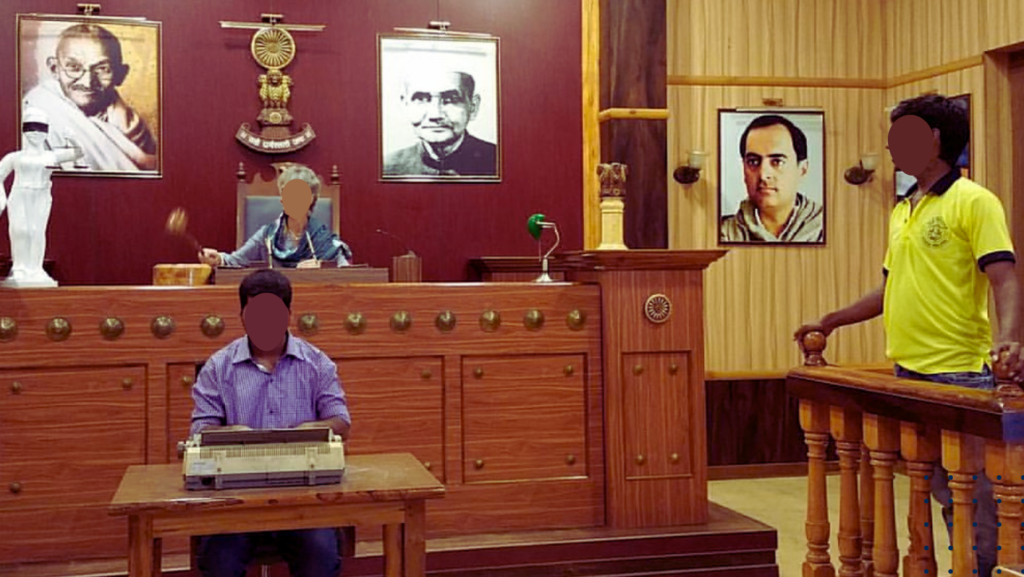
A hostile witness is a witness who testifies against the party who has called them to testify. Section 154 of the Indian Evidence Act of 1872 allows a party calling for witnesses to, with the permission of the Court, ask leading questions and cross-examine him when it is found that he is hostile or unwilling to answer questions put forward to him. But it is at the discretion of the Court to allow a party to cross-examine his witness. Generally, Advocates call upon their witnesses, hoping they will testify in favour of their party. Surprisingly, the witness turns hostile because, in most cases, the opposite party might have threatened him or implanted a sense of threat in his mind, upon which he denies the statement given by him previously. In such a case, the Advocate can request the Judge to declare the witness as a hostile witness. Then he could cross-examine the witness to get testimony more favourable to his case. In the case, Ravasaheb and others v. State of Karnataka, MANU/SC/0248/2023, the SC held that simply because several witnesses had turned hostile, that does not on its own give ground to reject the evidence of an eye witness. That eye witness was the deceased’s brother, and the prosecution had proven its case beyond reasonable doubt by producing acceptable evidence of the complainant and other witnesses.
Courts’ Of Justice

The High Court has inherent powers to quash FIR or pass any such orders under Section 482 of Criminal Procedure Code, 1973 (CrPC)…
Upgraded Minority Rights Under Companies Act 2013

The rule of majority is the key concept that defines the operation of shareholder democracy. However, it is also vital to guarantee that the majority’s authority is kept within reasonable limits and does not lead to oppression of the minority or mismanagement of the organisation. Minority interests must be considered while making decisions. A minority shareholder is an equity holder of a firm who does not have voting control due to ownership of less than 50% of the firm’s equity capital. Rights of minority shareholders under the Companies Act 2013
Let The Master Answer

Vicarious liability is the legal principle that a person or company is held liable for the actions of others or their employees. Responsibility for vicarious liability arises because of the legal doctrine known as Respondent Superior, which means, “Let the master answer.” This is because those with a higher legal relationship with someone who causes harm are held accountable for actions under their control. For example, if a driver commits an accident due to his negligence in his official capacity, the employer can be held liable to compensate for the losses suffered by the other party.
My Name Is Election Manifesto. My Promises Are Not Legally Enforceable
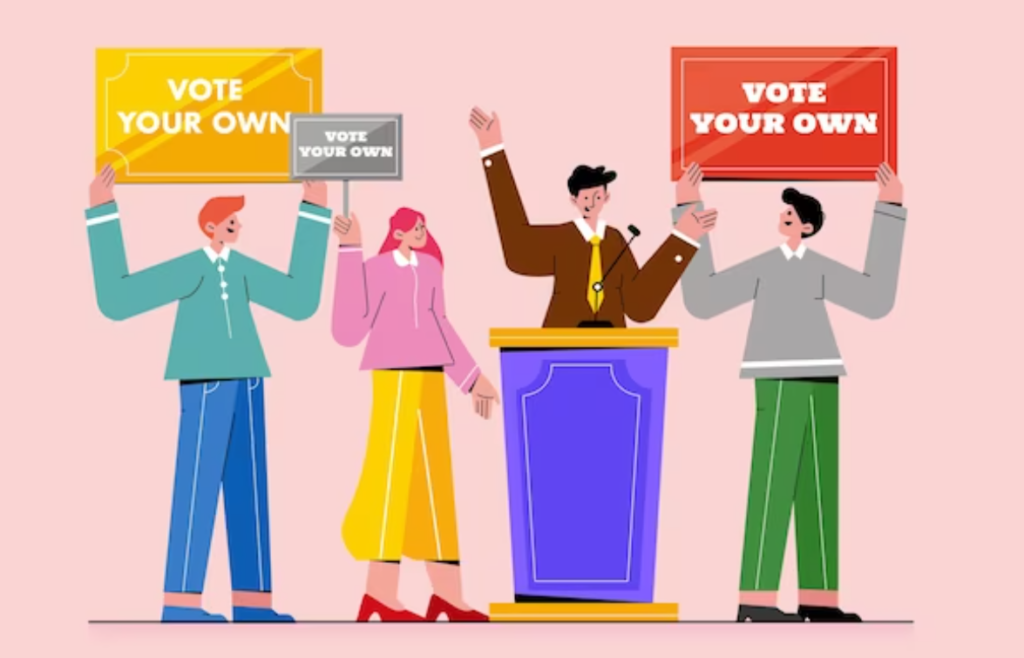
The election manifesto accountability saga seems to be never-ending. A puzzle that the law can solve but lawmakers refrain from solving. Section 123 of the Representation of People’s Act, 1951, brings on record acts deemed corrupt practices. Still, the section is not exhaustive enough to include political parties for inducing citizens to vote by providing freebies in their election manifestos. The courts have held that election manifestos are not hit by promissory estoppel or the doctrine of legitimate expectations. In ANZ Grindlays Bank Pie Vs. Commissioner, MCD 1995 II AD (Delhi) 573, where dealing with an argument of promissory estoppel and legitimate expectations based on an election manifesto, it was held that the election manifesto of a political party, howsoever boldly and widely promulgated and publicized, can never constitute promissory estoppel or provide a foundation for legitimate expectations. The Supreme Court of India in S.Subramaniam Balaji vs. Government of Tamil Nadu (2013) 9 SCC 659 directed the ECI to frame guidelines for regulating election manifestos of political parties. Guidelines issued by the Election Commission of India were incorporated in Part VIII of the Model Code of Conduct. The ECI guidelines directed that the election manifesto shall not be against the ideals and principles of the Indian Constitution and shall be consistent with the spirit of the Model Code of Conduct. It further directed political parties to ensure the credibility of their manifesto to explain the rationale for their promises along with indicating the ways and means, and financial requirements to achieve the same. The Election Commission has further directed all political parties to send a copy of their election manifestos and a Hindi/English version (if the original version is in the regional language) whenever released, within three days of its release, for the Election Commission’s record. The political parties have also been requested to submit a declaration and a manifesto that the program/policies and promises made therein are in consonance with Part VIII of the Model Code of Conduct. Courts have consistently dismissed the legal enforceability of election manifestos. It is pertinent to point out the principle of caveat emptor (buyer beware). May the electorate beware.
Blue Pencil Doctrine In India

Section 24 of the Indian Contract Act 1872 provides that where any part of a consideration in a contract is unlawful, then the contract is void. Section 27 provides that any restraint on lawful profession or trade is void to that extent. The Blue pencil doctrine was initially used in non-compete agreements and was later given a broader application for other portions of a contract. The case of Shin Satellite Public Co. Ltd. v. Jain Studios Limited, AIR 2006 SC 963, is a significant case in the applicability of the blue pencil doctrine. The Court put emphasis on “substantial severability” and not “textual divisibility”. This means saving the main or substantial portion of the contract by striking out the trivial and unnecessary portions. For the doctrine to be applied to a contract, substantial severability is necessary, and it is the duty of the Court to assess the contract. VALID PARTS The proper test for deciding the validity or otherwise of an agreement or order is ‘substantial severability’ and not ‘textual divisibility’. It is the duty of the Court to sever and separate the trivial or technical part by retaining the main or substantial part and by giving effect to the latter if it is legal, lawful, and otherwise enforceable. The Court must consider the question of whether the parties could have agreed on the valid terms of the agreement had they known that the other terms were invalid or unlawful. If the answer to the said question is affirmative, the doctrine of severability would apply, and the valid terms of the agreement could be enforced, ignoring invalid terms. Thus, the Indian Court affirmed the views of Lord Bridge that, for the application of the Blue Pencil Rule, substantial severability is necessary.
Protagoras’s Paradox
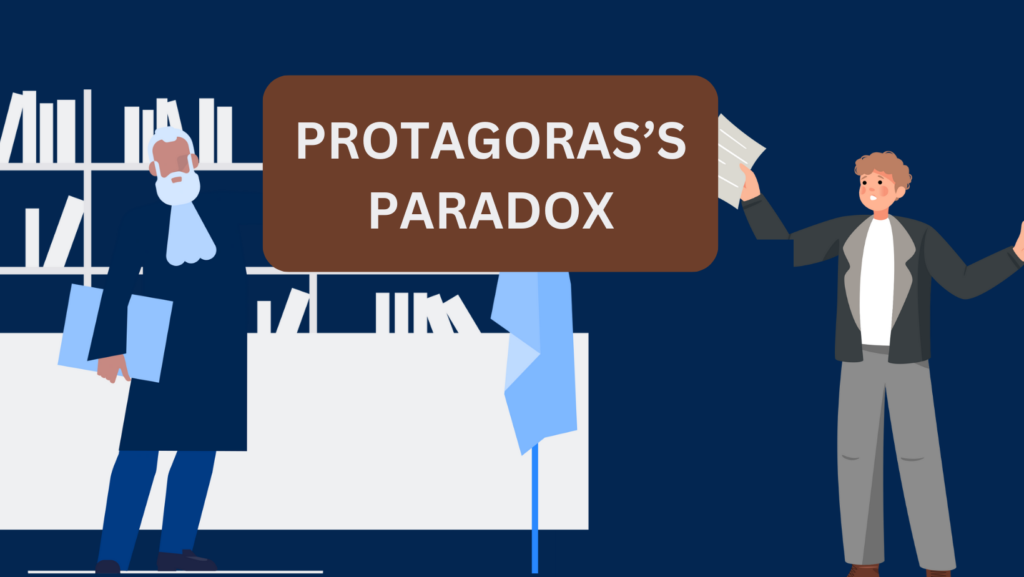
A law teacher once encountered a student who wanted to learn but couldn’t afford the tuition. As part of their agreement, the student promised, “I will pay your fee the day I win my first case in court.” The teacher accepted and started the law class. The student decided not to enter the profession of law after finishing his course. Tired of this, the teacher filed a lawsuit against the student, and both agreed to represent themselves in Court. “If I win this case, as per the court’s rules, the student has to pay me because the case is about his non-payment of dues,” the teacher argued in support of his position. “The student will continue to pay me even if I lose the case because he would have won it on his first try. Therefore, I will be paid in either case.” The student responded equally brilliantly: “If I win the case, according to the law, I don’t have to pay anything to the teacher as the case is about my non-payment of dues. And since I haven’t won my first case yet, I am not obligated to pay him if I lose the case. Therefore, I won’t pay the teacher in either case.” One of the first known logical paradoxes is known as Protagoras’ Paradox, and it dates back to ancient Greece. It’s from the period of Greek history when Euthalos was the pupil and Protagoras, who taught law, lived around 485–415 BC. Who is winning this unresolved legal dispute, and who is right? That is the nature of all paradoxes.
The Eggshell Rule

The eggshell rule, also known as the “thin skull rule”, states that if an individual suffers an injury due to previous ailment, it cannot be used as a defence to minimize the defendant’s liability. This means that the defendant will still be responsible for all effects, even in the worst scenarios where the harm created is more significant than anticipated. The phrase suggests that a defendant would be held liable for all damages resulting from the wrongful conduct, even if the tortfeasor did not intend to cause such a severe injury, if a person had a skull as delicate as the shell of an egg and a tortfeasor who was unaware of the condition injured that person’s head, causing the skull to break unexpectedly. The victim’s vulnerability to escape liability cannot be used as a defence by the defendant. The well-known criminal law principle “take your victim as you find him” also applies to tort law. All types of torts, including strict liability, negligence, nuisance, trespass, and intentional torts, are covered by this rule. The rule makes it plain that the tortfeasor does not have to be present while the victim is at risk physically. For instance, the trespasser will be entirely responsible if their entry into a house causes the victim to have a heart attack. Regardless of whether the victim was more vulnerable than the average person may have been, the concept requires that the defendant in a civil proceeding bear complete liability for compensating.