
Have multiple laws made for women ensured enough empowerment?

Women’s Empowerment is the most discussed yet least achieved target in India. The need to empower women was felt long back in the ‘50s, however, even after six decades women in India are not empowered enough and the need for a new law to empower them is felt almost now and then. ARTICLE 15 (3) of the Constitution of India 1949 “Nothing in this article shall prevent the State from making any special provision for women and children.” It states that even though the state will not discriminate against anyone, they can make special provisions only for women and children to safeguard their interests. A few of such laws are as follows; Dowry Prohibition Act, 1961. According to this act, taking or giving of dowry at the time of the marriage to the bride or the bridegroom and their family is a penal offence. The Dowry system, giving and taking of dowry, is a norm in India. Dowry is often asked of the bride and her family by the groom and his family. The system has taken strong roots because women after marriage move in with their spouses and in-laws. Also, over the centuries, the lack of economic independence of women and the taboo towards divorce has resulted in bride burning. When demands for dowry even after marriage are not met by the girl’s families, many women are tortured, beaten, and even burnt. It is one of the major challenges that our society is grappling with. A woman openly complaining about it has helped to spread the word and encourage other women to take a stand. Maternity Benefit Act, 1861. This act regulates the employment of women and maternity benefits mandated by law. It states that a woman employee who has worked in an organization for a period of at least 80 days during the 12 months preceding the date of her expected delivery is entitled to receive maternity benefits, which include maternity leave, nursing, breaks, medical allowance, etc. Medical Termination of Pregnancy Act, 1971. The Act came into effect in 1972, as amended in 1975 and 2002. The Act aims to reduce the occurrence of illegal abortion and consequent maternal mortality and morbidity. It clearly states the conditions under which a pregnancy can be ended or aborted and specifies the persons qualified to conduct the same. Muslim Women (Protection of Rights of Marriage) Act, 2019. This act is enacted by the Parliament to protect the rights of married Muslim women and to prohibit divorce by pronouncing talaq by their husbands and to provide for matters connected therewith or incidental thereto. Sexual Harassment of Women at Workplace (Prevention, Prohibition and Redressal) Act, 2013. To ensure women’s safety at the workplace, this Act seeks to protect them from sexual harassment at their place of work. Thirty-six percent of Indian companies and 25 percent among MNCs are not compliant with the Sexual Harassment Act according to a FICCI-EY November 2015 report. Sexual harassment at the workplace also includes – the use of language with sexual overtones, invasion of private space with a male colleague hovering too close for comfort, subtle touches, and innuendoes. Indecent Representation of Women (Prevention) Act, 1986. This Act prohibits indecent representation of women through advertisement or in publications, writings, paintings, figures, or in any other manner. National Commission for Women Act, 1990. The National Commission for Women (NCW) is a statutory body of the Government of India, established in January 1992. The NCW represents the rights of women in India and provides a voice for their issues and concerns. The National Commission for Women Act aims to improve the status of women and worked for their economic empowerment. The Protection of Women from Domestic Violence Act, 2005. An Act to provide for more effective protection of the rights of women guaranteed under the Constitution who are victims of violence of any kind occurring within the family and for matters connected therewith or incidental thereto. LANDMARK Judgments of Supreme Court:The Supreme Court has given so many judgments empowering women and their rights. Some of the Landmark Judgements are quoted below. In Vineeta Sharma v Rakesh Sharma(1) the Court held that daughters would have equal coparcenary rights in Hindu Undivided Family property (HUF) by their birth and could not be excluded from inheritance, irrespective of whether they were born before the 2005 amendment to the Hindu Succession Act, 1956. The Court framed detailed guidelines in the Vishakha v State of Rajasthan(2) that has to be followed by establishments in dealing with complaints about sexual harassment. These guidelines were eventually formalized as legislation with the passing of The Sexual Harassment of Women at Workplace (Prevention, Prohibition and Redressal) Act, 2013, a vital law to protect millions of women who enter the country’s workforce every year. In Shayra Bano v Union of India(3), the Court declared that the practice of instant triple talaq (talaq-e-bidat) is against the basic tenets of the Quran. Talaq-e- bidat is a practice that gives a man the right to divorce his wife by uttering ‘talaq’ three times in one sitting, without his wife’s consent. The Court directed the Centre to pass legislation in this regard, which led to the Muslim Women (Protection of Rights of Marriage) Act, 2019. In Joseph Shine v. Union of India(4), the Court struck down Section 497 IPC saying that it was unconstitutional as being violative of Articles 14, 15, and 21 of the Constitution since the very basis for criminalizing adultery was the assumption that a woman is considered as the property of the husband and cannot have relations outside the marriage. The said section violated the right to privacy as well as the liberty of women by discriminating against married women and perpetuating gender stereotypes. The Supreme Court in Joseph Shine vs. Union of India struck down Section 497 as unconstitutional. REFERENCES: Authors:
Do we really know what workplace sexual harassment is?

SEXUAL HARASSMENT IN THE WORKPLACE:Workplace harassment can be discriminatory, personal, physical, psychological, sexual, verbal, online, relating to power and quid pro quo, in the nature of retaliation. The rise in the rate of women going to work is increasing by the day, so is harassment faced by them in work place seems to be increasing. ACTS AMOUNTING TO SEXUAL HARASSMENT INCLUDES BUT ARE NOT LIMITED TO: POSH ACT: The sexual harassment against women is governed by the Sexual Harassment of Women at Workplace (Prevention, Prohibition and Redressal) Act, 2013 (POSH Act). The Vishaka case being the point of realization for the requirement of such a legislation, yet coming into existence after 16 years since the judgement was given until which the guidelines given by the Supreme Court, in that case, was followed to govern sexual harassment. The Posh Act was enacted with the objective to provide protection against sexual harassment of women at the workplace and for the prevention and redressal of complaints of sexual harassment and for matters connected therewith or incidental thereto. The POSH Act contains provisions as to how sexual harassment in workplace can be prevented. It also provides for a redressal mechanism through the “Internal Complaints Committee” in the workplace or “Local Complaints Committee” at the district. This act not only covers working women but also extends to the women who enter the workplace as clients, customers, or apprentices, the students and research scholars in colleges and universities, and patients in hospitals.Before the enactment of this Posh Act the Acts that govern the sexual harassment of women are listed below: Sexual harassment results in violation of a woman’s fundamental rights to equality under articles 14 and 15 and her right to life and dignity under Article 21 of the Constitution and right to practice any profession or to carry on any occupation, trade, or business with includes a right to a safe environment free from sexual harassment. DEFINITION OF SEXUAL HARASSMENT AS PER POSH ACT [Section 2(n)] “Sexual harassment” includes any one or more of the following unwelcome acts or behaviour (whether directly or by implication) namely: —(i) physical contact and advances; or(ii) a demand or request for sexual favours; or(iii) making sexually coloured remarks; or(iv) showing pornography; or(v) any other unwelcome physical, verbal or non-verbal conduct of sexual nature;In Shanta Kumar vs CSIR , the court held the following “Undoubtedly, physical contact or advances would constitute sexual harassment provided such physical contact is a part of the sexually determined behaviour. Such physical contact must be in the context of a behaviour which is sexually oriented. A mere accidental physical contact, even though unwelcome, would not amount to sexual harassment”. INTERNAL COMPLAINTS COMMITTEE: PROCEDURES FOLLOWED UNDER THE POSH ACT: OTHER LEGAL RECOURSES: Criminal ProceedingsThe sexual harassment amounts to offence under the IPC or under any other law, the employer shall initiate appropriate action in accordance with law by making complaint with the appropriate authority. In particular, it should ensure that victims or witnesses are not victimized or discriminated against while dealing with complaints of sexual harassment. Disciplinary ActionWhen the conduct of sexual harassment amounts to any misconduct in the employment, appropriate disciplinary action should be initiated by the employer in accordance with law. Authors:
Fundamental right to life guaranteed by the Constitution of India

PART III of the Constitution of India deals with FUNDAMENTAL RIGHTS. Though there are a handful of them, Right to Life is considered to be the most important of them all. Article 21 deals with Protection of life and personal liberty. The bare text of article 21 reads as, No person shall be deprived of his life or personal liberty except according to procedure established by law. However a convict who has been given a valid death sentence by a court of competent jurisdiction cannot be exempted from the penalty merely because he has the fundamental right to life. That is why the Article has expressly mentioned the words, “except according to procedure established by law.” Facets: Interpretations: (Case Laws)Following are few of the landmark interpretations by the hon’ble Supreme court: References: Authors:
Delegated Legislation

If delegated legislation is within constitutional limits, it retains legal validity and regulatory authority. What is delegated legislation, and does the executive acquire equivalent authority from the legislature through delegation? Are there limitations or checks on the executive’s exercise of delegated powers? In the case of Re: The Delhi Laws Act, 1912, The Ajmer Merwara Extension v. The Part C States (Laws) Act, 1951 SCR 747, a landmark judgement of seven benches answering the questions mentioned above was delivered. The Supreme Court has ruled that delegated legislation is the legal authority granted by the legislature to executive or administrative bodies to create laws, regulations, or rules within specified boundaries set by the primary legislation and further held that the executive can only perform ancillary functions, prohibiting the legislature from delegating essential functions to the commission. In Indian Oil Corporation v. Municipal Corporation AIR 1993 SC 844, the court ruled that any delegated legislation must align with the parent act and should not contradict its legislative policies. It implied that a delegate should not have more legislative authority than the delegator. AUTHOR: M Shanthish Kumar, 5th year B.A, LL. B(Hons.), Veltech School of Law, Chennai.
Doctrine of Prospective Overruling
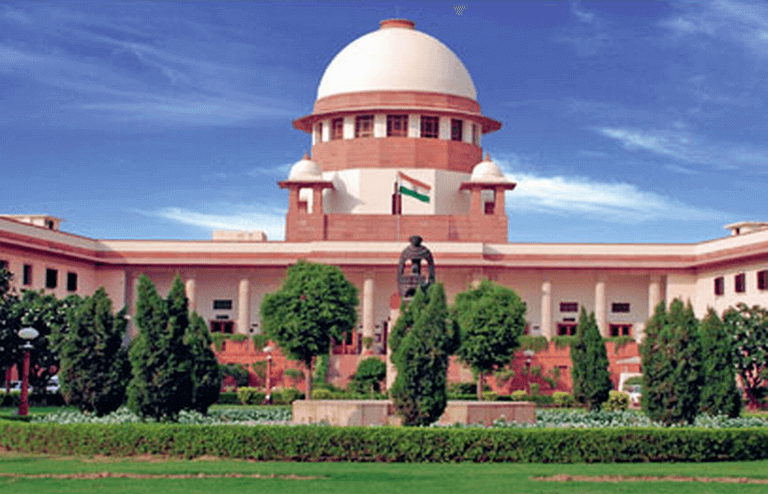
The Impact and Implications of the Doctrine of Prospective Ruling in India’s Legal System: What is the Doctrine of prospective ruling? Under what circumstances does the Doctrine of prospective ruling apply? Are they limited to certain types of cases or legal issues? Can Prospective Ruling be Retroactively Applied to Past Cases? In the case of Sarwan Kumar v. Madan Lal Aggarwal AIR 2003 SC1475, the Supreme Court has defined the Doctrine of prospective ruling and held that “the doctrine of “prospective overruling,” is the law declared by the CourtCourt applies only to future cases, and its applicability to cases that have reached finality is preserved because repeal would otherwise cause hardship to those who had relied on it.” In I. C. Golaknath & Ors vs State Of Punjab & Anrs 1967, SCR (2) 762, comprised of 11 bench judges, gave a landmark judgment that answers the above questions. The Supreme Court gave three conditions in which the Doctrine of prospective overruling can be applied. They are: a) Only in circumstances involving the interpretation of the Constitution can the Doctrine of prospective overruling be used, b) Only the Supreme Court has the authority to apply the Doctrine of prospective overruling, c) In accordance with the fairness of the cause or subject before it, the CourtCourt may amend the aspects of the prospective implementation of its judgment. By using the criteria above, the Court concluded that implementing the principle of retrospective overruling would result in anarchy, and thereby, it can be used for past cases. AUTHOR: M Shanthish Kumar, 5th year B.A, LL. B(Hons.), Veltech School of Law, Chennai
Ration card not reliable address proof- Delhi HC (Mohammad Hakim and Anr v DDA)

In the case of Mohammad Hakin and Anr V. Delhi Development Authority W.P.(C) 1585/2022, the residents of Kathputli colony in Delhi, facing redevelopment by Delhi Development Authority (DDA) and were seeking new housing which was denied by DDA stating that ration card must be given as it is a mandatory requirement for alternative allotment of home to them as per their policy guidelines and this triggers a dispute over the validity of ration cards as proof of address. Many people had no options due to the Delhi Development Authority’s insistence on requiring ration cards for housing allocation. The central issue revolved around whether ration cards could serve as legitimate proof of residence, given a gazette notification from the Union Ministry of Consumer Affairs, Food and Public Distribution in 2015, which disallowed the use of ration cards as proof of identity or residence. Justice Chandradhari Singh clarified that the ration card is only to receive food under the public distribution scheme, and therefore cannot be considered as a valid proof of address. Disregarding the DDA’s investigation and relevant findings, the Court ruled in favour of the plaintiffs, as a result of which the DDA was directed to provide additional housing to the petitioners, provided they fulfilled the prescribed requirements and deposited the required amount. This decision underscores the limited scope of ration cards and the need for authorities to consider broader policies and guidelines in such matters. AUTHOR: M Shanthish Kumar, 5th year B.A, LL. B(Hons.), Veltech School of Law, Chennai
Mutual Consent Divorce under Hindu Law

Mutual Consent Divorce under Hindu Law: Cooling-Off Period and Withdrawal of Consent: If consent is withdrawn by either of the parties before the cooling-off period, then the Divorce by Mutual Consent petition is not maintainable. What is divorce by mutual consent? What is the duration of the cooling-off period in mutual divorce proceedings, and what purpose does it serve? Can either party withdraw their consent for the divorce during the cooling-off period? Can the cooling-off period be waived? As per section 13-B of the Hindu Marriage Act, 1955, If the parties, i.e. the husband and wife, have been living separately for one year or more, they may agree to mutually dissolve their marriage and approach the Court with a divorce petition on the ground that they have not been able to live together and would like to obtain a divorce by mutual consent. In the case of Subhasree Datta v. Nil, 2008 SCC OnLine Cal 224, The Court held that the cooling-off period is explicitly mandated in the Hindu Marriage Act (HMA),1955, with the legislative intent being to grant couples a minimum of six months to reassess their decision and if possible, to reconcile their differences. In the case of Rajesh R. Nair v. Meera Babu, 2013 SCC OnLine Ker 24486, The Kerala High Court held that The Hindu Marriage Act (HMA) explicitly acknowledges the parties’ right to withdraw their consent granted for the divorce petition. This right is unconditional, meaning that for any reason whatsoever, if either or both parties decide to withdraw their consent, such withdrawal will align with the statutory provision outlined in Section 13-B(2) of the HMA. In the case of Amardeep Singh v. Harveen Kaur, (2017) 8 SCC 746. The Supreme Court has observed that the six-month period is not obligatory, and the Court has the authority to use its discretion and waive the cooling-off period if there is no chance of the parties living together again and there are opportunities for alternative rehabilitation. AUTHOR: M Shanthish Kumar, 5th year B.A, LL. B(Hons.), Veltech School of Law, Chennai
When can a police officer arrest a person without a warrant?

If a police officer has received a complaint regarding a cognisable offence or if they have reasonable suspicion that a cognisable offence has been committed, then he can arrest a person without a warrant. What circumstances authorise a police officer to make an arrest without a warrant? Can a police officer arrest a person without a warrant if there is a reasonable suspicion that he or she is involved in a crime? In the case of M.C. Abraham and Another. v. State of Maharashtra and Others AIRONLINE 2002 SC 789, The Supreme Court observed that in Section 41 of the Criminal Procedure Code, A police officer is empowered to arrest an individual without a warrant or a magistrate’s order. Section 41 of the criminal procedural code authorises the police officer to arrest a person without a warrant if the person commits a cognisable offence before the police if there is a reasonable complaint against the person or if credible information or suspicion suggests their involvement in a cognisable offence. In the case of Joginder Kumar vs. State of Uttar Pradesh and Ors., 1994 AIR 1349, The point of law questioned in this case was whether an individual could be arrested on unjustified and unclear grounds. The Supreme Court held that an arrest cannot be made solely because it is lawful for the police to do so. An officer making an arrest must provide justification for the arrest and demonstrate cause for the same. Except for heinous crimes (Cognisable offences), all arrests should be avoided if issuing a notice to appear before the police is feasible. To conclude, only in cases of cognisable offences the police officer can make an arrest without a warrant. AUTHOR: M Shanthish Kumar, 5th year B.A, LL. B(Hons.), Veltech School of Law, Chennai