
National Food Security Act

India, according to many Western countries, has always been addressed as a poor country. As seen in Western media for the longest time, India suffers from severe poverty, and children lack proper nutrients. But is it really true? To an extent, India still suffers from poverty, and there are still people who cannot afford a healthy meal thrice a day. India is a leading producer of various food products, including milk, rice, wheat, and more. Despite this, the people of various parts of India suffer from a lack of proper meals. This is due to the unequal distribution of food. It does not reach to every part of the country, thus causing deficiency. In addition to this, there are price fluctuations in essential food commodities and grains, including rice. This makes it difficult for people to purchase them during high inflation. To curb many such shortcomings, India passed the National Food Security Act (NFSA) in 2013, which addresses most of the significant issues concerning food. The NFSA divides its beneficiaries into 2: i) Priority Household and ii) Antyodaya Anna Yojana. The Antyodaya Anna Yojana households are those households headed by widows or, disabled persons or persons aged above 60 years of age. Each household is entitled to 5 kg of rice, free of cost, every month. When it comes to wheat and pulses, they range from Rs. 2 to Rs. 5 per kg. These goods are distributed through the Targeted Public Distribution System. In 2022, it was recorded that there were around 81 crore beneficiaries under the NFSA. The Act explicitly mentions the obligations of the Central and State governments and the local authorities. The NFSA faces a few criticisms, including storage issues, the quality of the food grains as the price is way below the market value, the credibility of the Public Distribution System and their maintenance, etc. Although there are various setbacks, 24.82 crore Indians have come out of multidimensional poverty in the last decade, and the poverty ratios have decreased from 29.17% to 11.28%. This shows effective growth, and with a steady and sturdy execution of laws, India can reach better numbers. Done By: Anoushka Samyuktha, B.A LL.B (Hons), LLM (Criminal Law), Junior Legal Consultant For Origin Law Labs
Tolls: An additional expense on every road trip. Are there benefits, though?

When going on a long road trip, it’s not just the fuel we must spend on; there is also the toll. What are these tolls? Road charges are paid as tax when we use highways and other roads, tunnels or even bridges connecting one state to the other. These toll taxes and other road policies come under the scope of the NHAI- National Highway Authority of India. Multiple roads and highways have recently been built, making travel convenient for personal use and trade. So, to maintain these roads as they are to attain maximum benefit, there is a small price paid by everyone who uses these roads. Since these roads are always maintained and kept well, it ensures safety for the passengers. There is always a debate about whether toll taxes tax people twice as much as they are paying road taxes. However, there are significant differences between the road and toll taxes. Road tax is a one-time payment made when registering the vehicle, whereas toll is paid each time a particular road or highway is used. Road tax forms a part of the state revenue, but the toll is collected for the maintenance and development of the road. The Indian Tolls Act 1851, with amendments made in 1864, discusses the power to cause levy of tolls and bridges within specific rates, exemptions from toll payment and penalties, etc.; recently, in ACIT v. Progressive Constructions Ltd (ITAT Hyderabad) [ITA No. 1845/Hyd/2014], it was ruled that the right to collect toll charges should be classified as intangible assets and is a business and commercial right. This concludes that the toll charges come into the picture only after the road is fully completed. A country can not just grow if one person decides; it’s every citizen’s collective effort and contribution, and toll is an excellent example. Done By: Anoushka Samyuktha, B.A LL.B (Hons), LLM (Criminal Law), Junior Legal Consultant For Origin Law Labs
Adverse Possession

Property owners who have saved enough money to purchase a respectable home are always in danger of losing it due to fraud or conflict. In a court of law, the person who has occupied a property for more than a period will be given preference over the owner. Is this phenomenon applicable in India? Adverse possession reminds the landowners not to keep their property unattended for long. Section 65 of the Limitation Act 1963 prescribes the period of adverse possession as 12 years based on previous possession. According to a recent ruling by the Supreme Court, adverse possession is the main reason why people who live on government property cannot claim title rights to it. The exemption to the principle of adverse possession is provided under Section 27 of the Limitation Act. According to Section 27 of the Limitation Act 1963, if an individual, within a designated timeframe, neglects to initiate legal proceedings to retrieve possession, their entitlement to regain possession or ownership of said property is also terminated. In Balakrishna v. Prakash (Second Appeal no. 74 of 1996, Bom), no documentation was presented to indicate that the defendant’s intent to possess began on a specific date. To the plaintiffs’ knowledge, respondents have not stated when they began occupying the property with animus possidendi. Thus, the defendants’ adverse possession plea does not prove the title. It’s essential to note that the burden of proof lies with the person claiming adverse possession, and the court will carefully examine all evidence before deciding. Done By: Anoushka Samyuktha, B.A LL.B (Hons), LLM (Criminal Law), Junior Legal ConsultantFor Origin Law Labs
Laws On Elections
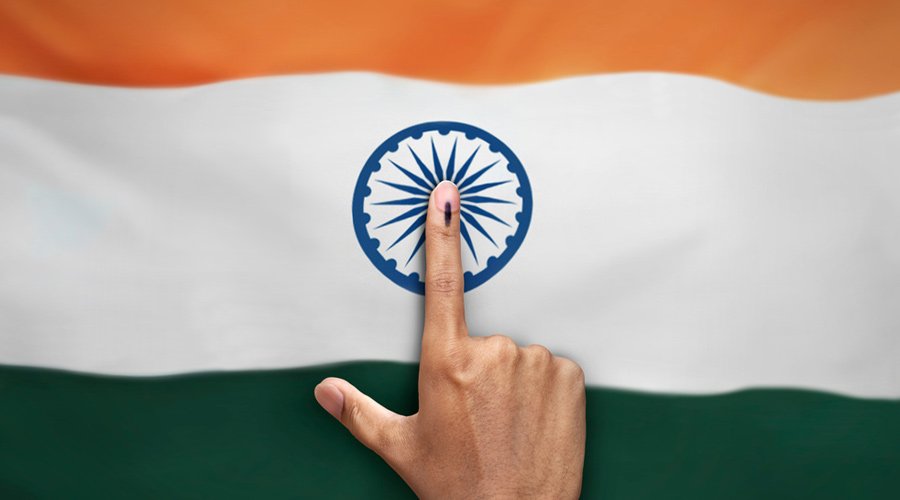
Representation of the People Act, 1951. The Representation of the People Act of 1951 deals with various electoral matters such as qualifications and disqualifications for Parliament and State Legislature membership, notification of general elections, registration of political parties, and the conduct of elections. This Act governs the entire election process in India. Delimitation Act,2002 The Delimitation Act of 2002 aims to redraw the boundaries of assembly and Lok Sabha constituencies based on recent census data. It establishes a Delimitation Commission for this purpose. The current constituency delimitation is based on the 1971 census, and the Act mandates changes to the seats reserved for Scheduled Castes and Scheduled Tribes based on the census data. The 84th Constitutional Amendment Act of 2002 freezes the number of seats until the first census after 2026. Parliament (Prevention of Disqualification) Act,1959 The Parliament (Prevention of Disqualification) Act, 1959, ensures that holding certain government positions does not disqualify individuals from being elected as members of Parliament. Scheduled Caste & Scheduled Tribes Orders (Amendment) Act, 1976 The Scheduled Castes and Scheduled Tribes Orders (Amendment) Act, 1976, allows for including and excluding certain castes and tribes from the Scheduled Castes and Scheduled Tribes lists. It also permits the readjustment of parliamentary and assembly constituency representation as needed. The Government of Union Territories Act, 1963 The Government of Union Territories Act of 1963 provides for Legislative Assemblies and Councils of Ministers for specific Union territories and addresses related matters. The Government of National Capital Territory of Delhi Act, 1991 The Government of National Capital Territory of Delhi Act, 1991, supplements constitutional provisions related to the Legislative Assembly and Council of Ministers for the National Capital Territory of Delhi and related matters. Presidential and Vice-Presidential Elections Act, 1952 The Presidential and Vice-Presidential Elections Act of 1952 regulates elections for the President and Vice-President of India. It specifies that election disputes can only be raised through an election petition presented to the Supreme Court and requires candidates to withdraw their candidature in person or through authorised representatives. Done By: Seethala B , BBA., LL.B (Hons.), Junior Legal ConsultantFor Origin Law Labs
Lokpal

To address citizens’ grievances amicably, the Administrative Reforms Commission (ARC) of India (1966-1970) recommended the establishment of two delegated authorities: Lokpal and Lokayukta. This concept was adapted from the institution of the Ombudsman in Scandinavian countries. In India, the then Law Minister, Ashok Kumar, introduced the concept of a Constitutional Ombudsman. This was established to combat corruption among public officials. A Joint Drafting Committee, consisting of five nominees of Shri Anna Hazare, was formed on 08.04.2011 to prepare a draft of the Lokpal Bill. After deliberative reports from the Committee and input from Chief Ministers of states and political parties, the Lokpal Bill was drafted. Following Cabinet approval, the Bill was introduced in the Lok Sabha, and after passing both houses and receiving the President’s assent, it came into force on 16th January 2011. The Lokpal and Lokayuktas Act 2013 primarily aims to establish Lokpal at the Centre and Lokayukta at the state level, thus enhancing vigilance in detecting corruption. The Lokpal must consist of a chairperson and a maximum of eight members, with 50% from a judicial background and 50% from SCs, STs, OBCs, minorities, and women. A Selection Committee comprising of the Prime Minister, the Speaker, the leader of the opposition in the Lok Sabha, the Chief Justice of India or a sitting Supreme Court Judge nominated by the CJI, and an eminent jurist nominated by the President from the nominations of the first four members, shall select the Chairperson and members of the Lokpal. The Lokpal’s jurisdiction covers all categories of public servants, including the Prime Minister, Ministers, Members of Parliament, and officials of the Central Government (Groups A, B, C, and D). The Lokpal has the authority to oversee and direct the Central Bureau of Investigation (CBI), the powers of a civil court and the ability to confiscate assets or other privileges obtained through corruption. Done By: Seethala B , BBA., LL.B (Hons.), Junior Legal ConsultantFor Origin Law Labs
Dumb Witness

Section 119 of the Indian Evidence Act, 1872 deals with a dumb witness who is unable to speak due to physical deformity. This Section states that if a witness is unable to speak, he may give his evidence in any other way that makes it intelligible, such as by writing or making signs; however, such writing and signs must be made in open Court, and the evidence so given is considered oral evidence. If the witness is unable to communicate verbally, the Court will record the statement with the assistance of an interpreter or a special educator, and such statement will be videographed. In Chander Singh v. State (2016 SCC OnLine Del 3574), the High Court of Delhi observed that a deaf and dumb witness’s vocabulary may be very limited, and that due care must be taken when such a witness is cross-examined. To assess the evidentiary relevance and admissibility of such kinds, in Meesala Ramakrishnan v. State of Andhra Pradesh((1994) 4 SCC 182), the Hon’ble Apex Court held that a dying declaration recorded through signs and nods of a person who is unable to speak for any reason is a verbal statement and thus relevant and admissible. As a result, the evidence provided by such individuals is legally valid and admissible. Done By: Nithyaparvathy R.G, B.Com LL.B (Hons.), Junior Legal ConsultantFor Origin Law Labs
Doctrine Of Relation Back Under Contracts Act

The Black’s Law Dictionary defines the term relation back as ‘a principle that an act done today is considered to have been done at an earlier time.’ The doctrine implies that under certain circumstances, an act done later is considered as if it was done earlier. It can also be stated that an act performed by a person in the present situation is linked to an act performed by him in the past to determine the issue or cause of action. According to Section 196 of the Indian Contract Act of 1872, ratifying an act has the same effect as if the acts were performed by his authority in the first place. It generally occurs when a person acts on behalf of another without the principal’s knowledge or consent, and the principal then ratifies the unapproved act. This provides the person on whose behalf the act was performed with the option of ratifying or disowning it. Although the principal may choose whether or not to adopt the unauthorised act, once approved, the ratification cannot be withdrawn or recalled, and the principal is bound as if he or she had authorised the act. Done By: Nithyaparvathy R.G, B.Com LL.B (Hons.), Junior Legal ConsultantFor Origin Law Labs
Schemes for incubators in Tamil Nadu

Startups and the creation of new startups are constantly being discussed these days. To make a startup successful, its needs must be appropriately catered from the budding stage. Incubators help in the initial stage of startups and help in their development as growth enablers. There are also various state government schemes to facilitate this process. The incubators are usually governed by the state government, central government, or the schemes they comprise. Startup India Seed Fund Eligibility of startup incubators under the Startup India seed fund Tamil Nadu Startup and Innovation Policy This scheme encourages industrial and private commercial organisations to set up incubators using the funds provided by various central government schemes, and the state will provide equal matching grants as per the schemes they are set up in. It also plans to develop a system to network the existing Incubators to leverage pre-established assets. It also encourages the development and establishment of sector-specific niche Incubators. They also conduct training programs for business incubators under the brand ‘incubaTN’. The Tamil Nadu Startup Seed Grant Fund (TNSSGF) provides Rs.50 lakh to academic institutional & private technology business Incubators. Done By: Sri Sai Kamalini M.S , B.A LL.B (Hons.), LLM ( Corporate law and Financial policy), Junior Legal ConsultantFor Origin Law Labs