Laws On Indian Marrying A Foreign Citizen

“Tying the knots Across Nations: Understanding the Legalities of Indian – Foreign Citizen Marriages” In India, the laws governing the marriage of an Indian citizen to a foreign citizen primarily fall under the framework of the Special Marriage Act, 1951. 1.Special Marriage Act, 1954: –The Special Marriage Act is applicable to all citizens of India irrespective of their religion or faith. – It provides for a special form of marriage for people of India and all Indian nationals in foreign countries, irrespective of the country’s laws where either of them resides. 2. The Foreign Marriage Act, 1969 offers an alternative avenue for the marriage of an Indian citizen to a foreigner, supplementing the provisions of the Special Marriage Act. Enacted by the Indian parliament to address the distinct requirements of international marriages, this legislation requires at least one party to be an Indian citizen. The legal age for brides is eighteen and above, while for grooms, it is twenty-one and above, irrespective of the legal marriage age in the foreign party’s nation. This act can be utilised by Indian citizens engaging in marriages with foreigners or those getting married outside India, providing a legal framework for the formalisation of their union. Documents required- 3. Procedure for Marriage: – Both parties must give notice to the Marriage Officer of the district in which at least one of them has resided for at least 30 days prior to the date of the notice. – The notice is then published, allowing for objections to be raised. – If no objections are received, the marriage can be solemnised after the expiration of the 30-day notice period. 4. Conditions for Marriage: – Either party should not have a spouse living at the time of marriage. – Both parties should be of marriageable age (21 years for males and 18 years for females). – Both parties should be capable of giving valid consent, not suffering from mental disorders or unfit for marriage and procreation of children. 5. Validity Worldwide: – Marriages solemnised under the Special Marriage Act are considered valid worldwide. 6. No Religious Ceremony Required: – One notable aspect is that there is no requirement for any religious ceremonies. The marriage is a civil contract. Done By: Reshma A, 5th year B.Com., LL.B(Hons.) SRM University, Kattangulathur For Origin Law Labs
Hit And Run – “Swift Exit”

In simple terms, hit and run means where an individual hits another vehicle while driving and flees away from the spot. Section 161 of the Motor Vehicles Act defines hit-and-run as “an accident arising out of the use of a motor vehicle(s) the identity of which cannot be ascertained despite reasonable efforts for the purpose.” A driver’s responsibility is to report a road mishap involving their vehicle. If failed, the victims are subject to IPC sections 279,304A and 338. · Driving recklessly on public roads, as outlined in Section 279, can result in imprisonment for six months, a Rs 1000 fine, or both. This offence is bailable and falls under the jurisdiction of the district magistrate. · If a non-alcohol-affected driver causes a fatal accident, it falls under section 304A, with potential imprisonment up to two years, a fine exceeding Rs 1000, or both. Section 304A is a non-bailable offence, and a lifetime imprisonment conviction is possible. · In severe instances, a hit-and-run case may be reported under Section 302, relating to murder. A driver charged under Section 302 may face a death sentence or life imprisonment. · For minors involved in such cases, the law imposes three years of imprisonment on the parents, accompanied by substantial fines. For a person who has experienced an accident, maintaining composure, gathering extensive details about the vehicle and driver, and promptly calling for emergency help are vital. If you find yourself responsible for an accident, it’s crucial to acknowledge that fleeing the scene is a criminal offence. Instead, remain at the site, share information with the other party, seek assistance for any injuries, and await the arrival of authorities. Always bear in mind that the consequences of a hit-and-run incident can be significantly shaped by swift and appropriate actions. In conclusion, hit and run incidents are serious offences that can have severe consequences. Hit and run laws vary by jurisdiction, but in general, they are designed to ensure that individuals involved in accidents remain at scene, exchange information and provide assistance if necessary. These laws aim to protect the rights and safety of all parties involved. Done By: Reshma A, 5th year B.Com., LL.B(Hons.) SRM University, Kattangulathur For Origin Law Labs
Right To Recall Laws In India
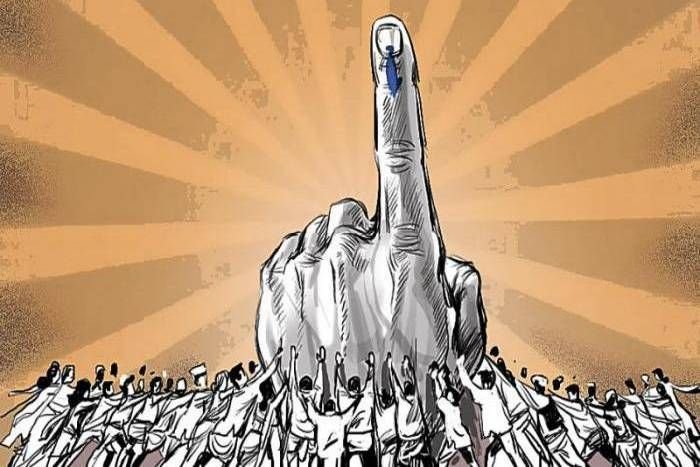
In India, it’s a common practice for politicians to rely on false promises and campaign pledges without genuine intentions of fulfilling them. Politicians across parties consistently make extravagant commitments to voters, only to fall short of delivering. Due to the absence of laws penalising deceptive promises, political leaders have unchecked freedom to make unverified claims. Voters, trusting these assurances, have no choice but to endure a full five-year term, repeating the cycle with the next candidate and their enticing promises. However, a potential solution to hold leaders accountable exists—the Right to Recall. Gaining momentum among dissatisfied voters, this right could serve as a mechanism for accountability. Unlike the current scenario where voters lack the power to express dissatisfaction during the five-year term, the Right to Recall empowers them to initiate a direct vote to ‘de-elect’ a legislator based on a specified number of votes. This post-election measure aims to uphold representatives’ responsibility to their constituents, using the democratic process to address the damage caused by inaccurate pledges. History and Evolution The historical roots of the Right to Recall can be traced back to ancient Greek and Roman republics, where citizens held the power to remove officials. In modern times, countries like Switzerland, Venezuela, Canada, and the United States have adopted this right at various levels of government. Since Vedic times, the idea of “Rajdharma” has been used to justify the removal of a monarch due to a lack of competent government. In India, the right to recall was first proposed by M.N. Roy, a radical humanist and political activist, in 1944. He advocated for a change to a devolved and decentralised form of administration in 1944, allowing for the election and recall of representatives. Later, Jayaprakash Narayan, a socialist leader and the founder of the Total Revolution movement, also supported the idea of the right to recall in 1974. Current Status Currently, India lacks a provision for the Right to Recall at the state and central levels. The Representation of the People Act, 1951, does not allow for the recall of elected representatives. However, there have been attempts to introduce this right, such as MP Varun Gandhi’s 2016 Private Members Bill, proposing the inclusion of the ‘Right to Recall’ against dissatisfactory MPs and MLAs within two years of being elected if 75% of people who voted for them are dissatisfied with their presentation. Some states such as Madhya Pradesh, Bihar, and Chhattisgarh have introduced the right to recall for the local bodies such as panchayats and municipalities. These states have enacted laws that allow the citizens to initiate a recall process against the elected representatives of the local bodies, such as the sarpanch, the mukhiya, the corporator, and the mayor, on the grounds of non-performance, corruption, or misconduct. The recall process involves the collection of signatures or votes from a certain percentage of the electorate, followed by a verification and a referendum. Advantages and Disadvantages of the Right to Recall: Advantages: · Introducing the right to recall improves the accountability and transparency of elected representatives. This ensures that they approach their duties more carefully, knowing that the voters can remove them at any point. · The right to recall acts as a deterrent against corruption and criminalization in politics. Voters gain the power to reject representatives involved in illegal activities, opting for honest and competent candidates instead. · Strengthening democracy, the right to recall increases citizen participation in governance, providing a platform for expressing opinions, correcting mistakes, and changing preferences without waiting for regular elections. Disadvantages: · Despite its potential benefits, the right to recall may be open to misuse by vested interests or opposition parties, leading to the unjust removal of elected representatives for political gain rather than valid reasons. · Implementing the right to recall may bring instability and uncertainty in government. Frequent changes in leadership or legislative composition can disrupt policy-making and developmental projects, impacting the overall continuity and coherence of governance. · The right to recall involves financial and procedural burdens, requiring significant time, money, and resources. This could divert attention and funds from addressing other urgent societal issues and needs. The right to recall is a controversial and complex issue, which has both merits and demerits. While it may not be a panacea for all the problems of the political system, it can be a useful tool to improve the quality and accountability of the governance, if implemented with proper safeguards and regulations. Done By: Adithya Menon, 5th year B.A, LL.B(Hons.) Veltech School of Law, Chennai For Origin Law Labs
Laws On Co-Ownership Of Property In India

When a single person owns a property, it is referred to as sole ownership; however, when multiple people own the property, it is referred to as joint ownership or co-ownership. The transition from co-ownership to sole ownership can be achieved through partition. Often, a property’s co-owner is typically a member of the same family. Designation as a co-owner can be done through a will in the individual’s favour. Types Of Ownership Under Co-Ownership: Given the broad nature of the term “co-owner,” it can encompass various ownership types such as joint tenancy, tenancy in common, Coparceners, and undivided Hindu family members. Co-owners have the rights of possession, enjoyment, and sale under Indian law. The term co-ownership is used interchangeably with joint ownership. Types of co-ownership include: 1. Tenants in Common: Co-ownership without clear delineation, where each tenant holds a fractional part of the entire property. Upon the death of a tenant in common, their interest passes to another person, not necessarily a co-owner. 2. Joint Tenants: Co-ownership with the right of survivorship, where the share of a deceased joint tenant passes to the surviving co-owners. Joint tenants must have equal ownership shares and meet specific criteria. 3. Tenancy by the Entirety: Co-ownership designed for married couples, providing survivor’s benefits and requiring unity of time, possession, title, interest, and marriage. Termination can occur due to divorce, death, or mutual agreement. 4. Coparcenary: Specific to Hindu Undivided Families (HUF), this concept allows even unborn children to have an equal share. Upon birth, the child becomes a co-owner, and when a coparcener passes away, their share goes to their heirs, not to other coparceners. Transfer By One Co-Owner: Section 44 of the Transfer of Property Act of 1882 addresses the transfer of shares by one co-owner. When a co-owner legally transfers their share, the transferee assumes the transferor’s rights and obligations in the joint property. The transferee has the right to joint possession and common enjoyment but not exclusive possession until the property is partitioned. This provision aims to deter strangers from purchasing a co-undivided sharer’s share and allows non-selling co-sharers to buy out stranger purchasers. Section 47 states that when co-owners transfer a share without specifying individual shares, the transfer takes effect equally on all shares. This principle is based on the concept of subrogation and substitution, providing the transferee with all the transferor’s rights upon the transfer of immovable property, considering the shares’ proportionality. Done By: Adithya Menon, 5th year B.A, LL.B(Hons.) Veltech School of Law, Chennai For Origin Law Labs
Who’S At Fault When A Driverless Car Crashes?

Films such as Total Recall, Minority Report, and I, Robot have ignited our fascination with the idea of a futuristic society where self-driving cars dominate the roads. Elon Musk and his Tesla company are bringing us closer to turning the vision of self-driving cars into a tangible reality. However, this progress raises a crucial question: In the event of a driverless car collision, who will bear the responsibility? Self-Driving Cars The Society of Automotive Engineers outlines levels of automation: In the current scenario there hasn’t yet been a vehicle beyond a Level 3 vehicle is on the roads, yet. Tesla’s “Autopilot” feature and Cadillac’s “Super Cruise” feature still require the attention of the drivers to take control as and when necessary. Self-Driving Car Accidents Crashes involving driverless cars are not unheard of. Between the two major robotaxi companies, Waymo and Cruise, there have been 117 and 72 collisions, respectively, from 2022 to the present. This does not include 29 incidents where a human driver had to take control of the vehicle to avoid an accident. In 2022, automakers reported approximately 400 crashes of vehicles with partially automated driver-assist systems, with 273 of these accidents involving Teslas, the most common vehicle with self-driving capability. As autonomous vehicles continue to be developed and deployed, it is essential to address the safety concerns and potential liabilities associated with these vehicles. Determining Liability in Autonomous Vehicle Accidents As autonomous vehicles become more prevalent, the question of liability in accidents involving these high-tech cars is a complex legal conundrum. The shift from driver to system control introduces new challenges in determining who is at fault when something goes wrong on the road. Typically, the parties that could be held responsible include: • The driver of the “self-driving” vehicle Under current legislation, the responsibility for a car accident falls on the driver deemed at fault, with liability typically originating from the vehicle’s owner, which may not always be the driver. These regulations also apply to semi-autonomous vehicles with up to Level 3 automation. Should the driver opt to disengage the autopilot and manually control the vehicle, they could be held accountable in the event of a collision. However, the legal framework becomes more complex with fully autonomous vehicles that lack a human driver, as there is no established legal precedent in such scenarios. • The vehicle’s manufacturer If an accident occurs due to a defect in a semi-automated or fully autonomous vehicle, the manufacturer will be held responsible. This aligns with existing product liability laws, eliminating the need for revisions to accommodate self-driving vehicles. Companies like Volvo have already committed to covering all damages and injuries caused by their autonomous cars. • Software Developers In self-driving cars, judgement of human drivers is replaced by software and sensors utilising intricate data and algorithms. Any flaw in this software could lead to accidents, holding technology designers accountable. For instance, if a cow obstructs the road while a human can see the cow and make a split-second decision, the software must “see” and swiftly decide, mirroring human capabilities. Failure to do so would render the software designer liable for ensuing accidents. Done By: Adithya Menon, 5th year B.A, LL.B(Hons.) Veltech School of Law, Chennai For Origin Law Labs
Can Deities Be Legal Persons?
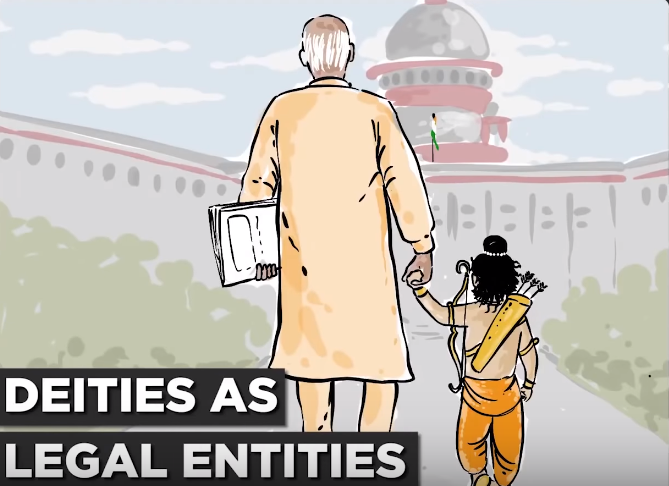
A legal person is an entity that has rights and obligations under the law, such as the ability to own property, sue and be sued, and enter into contracts. In India, legal personhood extends beyond human beings and corporations to encompass deities, idols, temples, rivers, and animals. God As a Juristic Person A juristic person, also known as a juridical person, is a non-human entity that is recognized as having legal personality and the capacity to perform legal acts and to be held liable. This concept is fundamental in law and includes entities such as corporations, government agencies, and certain organisations In Shriomani Gurudwara Parbandhak Committee vs Som Nath and Ors. AIR 2000 SC 1421, the Supreme Court said: “The very words Juristic Person connote recognition of an entity to be in law a person which otherwise it is not. In other words, it is not an individual natural person but an artificially created person which is to be recognized to be in law as such.” In 1887, the Bombay High Court held in Shankarlal Purshottam Gor vs Dakor Temple Committee, AIR 1926 Bom 179 (India) that “Hindu idol is a juridical subject and the pious idea that it embodies is given the status of a legal person.” This was reinforced in the 1921 order in Vidya Varuthi Thirtha vs Balusami Ayyar, (1922) 24 BOMLR 629 (India), where the court said, “under the Hindu law, the image of a deity… (is) a ‘juristic entity’, vested with the capacity of receiving gifts and holding property”. Guardianship and Representation: In the eyes of Indian law, a deity is treated as a perpetual minor, requiring the appointment of a guardian or Shebait to protect its interests. As seen in Bishwanath and Ors vs Shri Radhballabji 1967 AIR 1044, the Shebait must act in the best interests of the minor deity. If the shebait alienates the idol from its property, then a devotee will be allowed to move as friend of the deity. The deity being a minor, legal proceedings involving the deity should follow the rules laid out in rule XXXII of the CPC, 1908. Conditions for Legal Personhood: However It is essential to note that not all deities are considered legal persons; only after public consecration or pran pratishtha does an idol gain this status. In Yogendra Nath Naskar vs. Income-Tax Commissioner, the Supreme Court ruled: “Not all idols would qualify as ‘juristic person’ but only when they are consecrated and placed in a public place for the general public.” The complexity deepens when comparing religious spaces, as a mosque or church is not recognized as a juristic person due to their nature as places of worship rather than objects of worship. In the Sabarimala Case (Indian Young Lawyers Association & Ors. vs The State of Kerala, [2017] 10 SCC 689), it was argued that Lord Ayyappa was a juristic person who enjoyed fundamental rights under the Constitution and allowing women of menstruating age into the temple would violate the right to privacy of the deity. However, the Court ruled that “Merely because a deity has been granted limited rights as juristic persons under statutory law does not mean that the deity necessarily has constitutional rights.” Done By: Adithya Menon, 5th year B.A, LL.B(Hons.) Veltech School of Law, Chennai For Origin Law Labs
Legal Mandate For Marriage Registration

SC 11The Supreme Court of India in the case of Smt. Seema v. Ashwani Kumar AIR 2006 58. stated that marriages involving individuals of diverse religions and who are citizens of India must be mandated for registration in the states where the marriage is conducted. The recommendation by National Commission for Women backs mandatory marriage registration, recognizing its impact on issues such as Preventing child marriages, curbing bigamy, empowering married women to claim their rights concerning residence in the marital home, maintenance and granting widows their rightful inheritance after their husband’s demise etc. Legislative Acts The Parsi Marriage and Divorce Act of 1936 and Christian Marriage Act of 1872 mostly rely on The Birth, Death and Marriage Registration Act,1886 to enforce mandatory marriage registration. Section 6 of Parsi Marriage and Divorce Act mentions Certificate and registry of marriage and Section 37 of Christian Marriage Act provides for registration of marriage. A Hindu marriage may be solemnised by performing the customary rites of the parties under Section 7 of Hindu Marriage Act 1955.For example – Saptapadi (Marriage reaches fulfilment as the couple takes seven steps around the sacred fire in unison). Marriages occurring under the Special Marriage Act,1954 have to be registered in order to be seen as a valid marriage. Section 16 of the Act outlines the marriage registration process. State Level Implementation Several States have enacted laws to enforce Mandatory Marriage registrations including Himachal Pradesh, Uttar Pradesh and Tamilnadu etc. Although many states require registration and impose penalties for delayed compliance, none have passed laws declaring unregistered marriages as invalid or void. Conflicting Laws On Minimum Age Criteria In Lajja Devi v. State, 2012 SCC OnLine Del 3937, Delhi High Court highlighted the conflicting laws regarding the consequences of marriage where one or both parties do not meet the minimum legal age requirements. While Prohibition of Child Marriage Act,2006 specifies 18 as the minimum age for Brides and 21 for groom whereas Muslim law recognizes marriage of minors who have reached puberty as valid. The Supreme Court’s examination led by DY Chandrachud of the conflict between Prohibition of Child Marriage Act and Muslim Personal law, particularly regarding the legal marriage age for Muslim girls, is currently underway as of 2023. This follows a precedent set in the 2018 Hadiya Akhila and Safin Jahan Case. Conclusion The talk about unregistered marriages in India revolves around making sure marriages get officially recorded, different states’ rules about it, and arguments over the youngest age for marriage, which courts are trying to sort out for everyone to agree on. Done By: V. Madhumitha, 5th year B.A, LL.B(Hons.) SRM University, Kattangulathur For Origin Law Labs
Validity Of Child Witness In Matrimonial Dispute
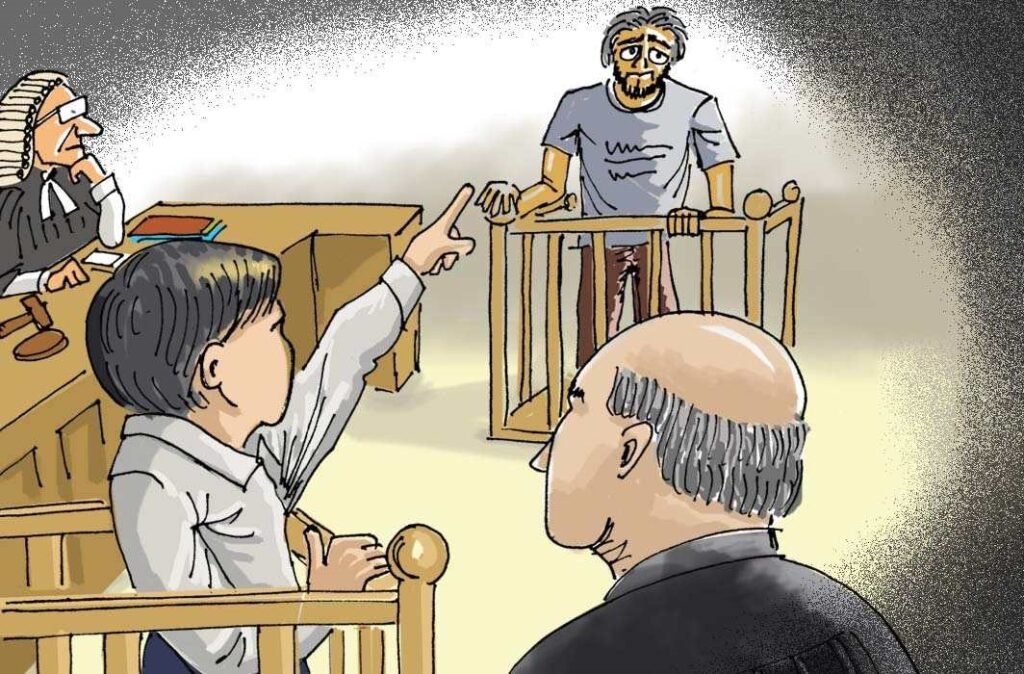
In India, anyone who’s seen something can be a witness, including children. The court makes sure the child understands questions and can answer sensibly. But just like any other witness, their stories need to be checked well. Sometimes, courts worry if a child’s story might be changed by someone or if they didn’t understand things properly. So, they ask the child questions to see if they understand well enough to tell the truth. This is called a “voir dire” test. The validity of child witnesses in matrimonial disputes in India is a nuanced issue, governed primarily by the Indian Evidence Act,1872. Section 118 of the Act allows all persons, irrespective of age, to testify. Section 118A evaluates the credibility of witnesses based on their competence and understanding. Psychological Consideration In Sakshi vs Union Of India Supp(2) SCR 723 (2004), the Supreme Court provided guidelines to protect child witnesses, allowing for closed circuit televisions, special rooms, and assistance from child welfare organisations to make the trial less traumatic for them. In Shafin Jahan V Asokan K.M. & Ors. S.L.P. (Crl.) No. 5777 of 2017 Case, The High Court highlighted that in matrimonial disputes, the child involved should be regarded as a third party. The court, acting as Parens Patriae must ensure the child’s well being remains unaffected. R.Selvaraja vs S.Latha C.R.P. PD. No. 3147 of 2011 (2013) Facts: A trial involving a matrimonial dispute where a minor child was involved. The trial court examined the minor witness after posing questions to assess their capability before allowing their testimony under Section 118. Issue: Whether the trial court’s assessment of the minor’s competency before examination was adequate and whether the examination of the minor as a witness by one of the parties was in line with the court’s role in determining a child’s wishes in a custody issue? Judgement: The court set aside the trial court’s order dated 2011 and directed the exclusion of the evidence of the minor witness recorded by the trial court because of the error in allowing formal examination of the minor by one of the involved parties(wife) in the courtroom. Also emphasised the importance of ascertaining the child’s wishes regarding a custody issue. Assessment Of Child Witness Testimony Section 114 of the Indian Evidence Act urges caution when assessing testimony from child witnesses due to their susceptibility to external influences. (Need of corroborative evidence) As it’s not always easy. Courts have to be very careful because a child’s story might not always be completely accurate. So, they try to make sure that what the child says matches with other information. Done By: V. Madhumitha, 5th year B.A, LL.B(Hons.) SRM University, Kattangulathur For Origin Law Labs