
Child Begging In India: A Legal Analysis
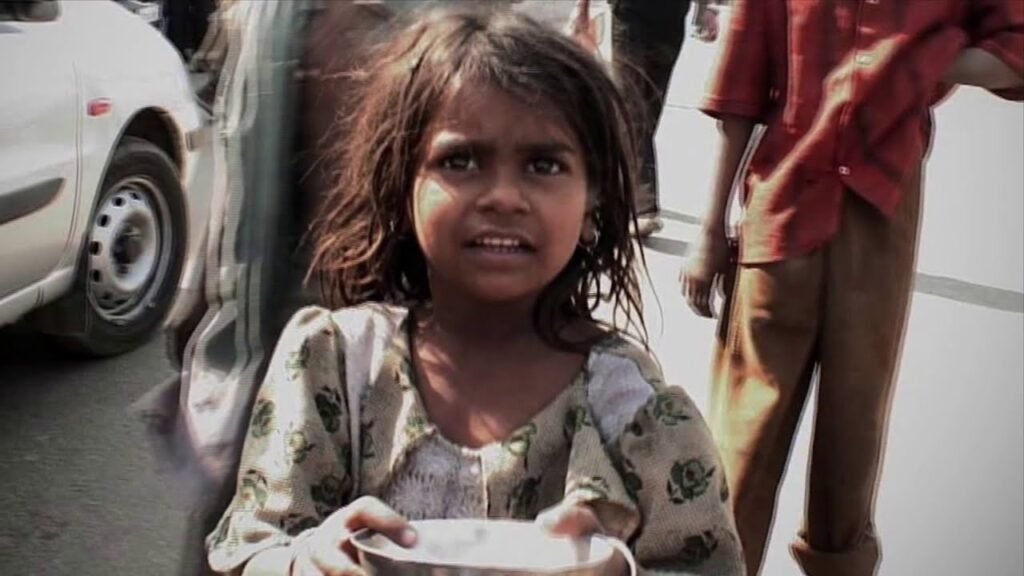
Despite India’s economic growth in the past decade, the increasing socio-economic divide has led to magnifying the problem of begging and beggars in India. The issue is amplified when it comes to child begging in India, with its roots in neglect, coercion, cartels and mafias, forcing and exposing an increasing number of children each year to the streets. This cycle has plagued and ruined the lives of children who have forever lost their innocent childhood to slavery and begging. In India, there is no national law dealing with begging, but several States and Union Territories have enacted laws which outright ban and criminalise begging within their territories. >THE TAMIL NADU PREVENTION OF BEGGING ACT, 1945 The Tamil Nadu Prevention of Begging Act (hereinafter referred to as the ‘Act’) was enacted on 24th June 1945 with the intent to “provide for the prevention of begging for the detention and employment of beggars and their dependents in work-houses or special homes, and for the custody, trial and punishment of beggar offenders in the State of Tamil Nadu”.[1] Section 2(1) defines ‘begging’ as- (i) soliciting or receiving alms in a public place, whether under the pretence of singing, dancing, performing tricks or selling articles or otherwise; (ii) entering on any private premises for the purpose of soliciting or receiving alms; (iii) exposing or exhibiting, with the object of obtaining or extorting alms, any sore, wound, injury, deformity or disease, whether of himself or any other person or an animal; (iv) allowing oneself to be used as an exhibit for the purpose of soliciting or receiving alms; but does not include soliciting or receiving money, food, or gifts for such purposes as prescribed. In terms of procedure and penalty, the Act makes a clear distinction between those above the age of eighteen and those below the age of eighteen. A medical examiner should examine any person arrested per Section 5 of the Act to attest to his/her age and physical capacity. Suppose it is found that the arrested person has not attained the age of eighteen. In that case, he may be produced before the Juvenile Justice Court with the certificate provided by the medical examiner under Section 6 of the Act. If the Magistrate finds that the person arrested under beggary has not attained the age of eighteen, the Magistrate may pass any order which a Juvenile Preamble (The Tamil Nadu Prevention of Begging Act, 1945)[1] The Court could have passed under Section 12(1) of the Act. According to Section 12 of the Act, if a person who is under the age of 18 is arrested, s/he shall be produced before a Magistrate within 24 hours of his arrest, and the Magistrate shall send him to Juvenile Court. If the arrested person is found to be under the age of 14 years and has no house or guardians or if s/he has guardians with criminal or drunken habits, then the Court shall pass orders under Section 29(1) of Tamil Nadu Children Act, 1920. [2] If the Court finds out that the person arrested is above the age of 14 but below the age of 18 and is guilty of an offence under Section 3 of the Act, then the Court may order that s/he may be detained in a workhouse provided s/he is physically capable and if not, s/he may be detained in special home if there is one. [3] INDIAN PENAL CODE, 1860 In order to tackle the growing menace of kidnapping for/and forced begging of children, the Indian Penal Code, 1860, was amended in 1959 to insert Sections 268 and 363A, which criminalise the exploitation of children for begging. Section 363A, in defining the Act of begging and a minor[4], makes it illegal to employ, kidnap or maim a minor for the purposes of begging. Section 268, dealing with public nuisance, can be used to curb begging where begging qualifies as a public nuisance for the purposes of the provision. JUVENILE JUSTICE (CARE AND PROTECTION) ACT, 2015 Section 76 of the Juvenile Justice Act 2015 provides for the offence of employing a juvenile[5] or child[6] for begging[7]. The Section details that any person who employs or uses any child for the purposes of begging or abets such commission thereof shall be punishable with imprisonment, which may extend to five years, and shall also be liable to a fine of one lakh rupees. In case, for the purposes of begging, the person amputates or maims the child, he/she shall be punishable with rigorous imprisonment for a term not less than seven years which may extend to ten years. He/she shall also be liable to a fine of five lakh rupees. [1] Section 8, Tamil Nadu Prevention of Begging Act, 1945 [2] Section 12(2), Tamil Nadu Prevention of Begging Act, 1945 [3] Section 12(3), Tamil Nadu Prevention of Begging Act, 1945 [4] For the purposes of this provision, a minor is defined as a person under sixteen years of age in the case of a male; a person under eighteen years of age in the case of a female. [5] Section 2(35), Juvenile Justice Act, 2015. [6] Section 2(12), Juvenile Justice Act, 2015. [7] Section 2(8), Juvenile Justice Act, 2015 THE CHILDREN ACT, 1960 Section 42 of the Children Act, 1960, provides that any person who employs, causes or abets a child[1] for/to the purposes of begging[2] shall be punishable with a term which may extend to one year and/or a fine. [1] Section 2(e), Children Act, 1960 [2] Section 2(b), Children Act, 1960
Can One Legally Own Land On The Moon?

Buying land on the moon and gifting it to your loved ones has become a trend in recent years. Ranging from celebrities to the common man, many people seem to have purchased a piece of land on the moon. A simple Google search leads us to find various companies and real estate agents offering up to sell a piece of land on the moon, often even willing to certify the same. But can a person buy land on the moon, and is it legal to do so? Both these questions can, of course, be answered, not in a direct legal sense, but with the help of loopholes in laws or treaties dealing with the regulation of Outer Space. Outer Space Treaty, 1967 The Treaty on Principles governing the activities of States in the exploration and use of outer space is called the ‘Outer Space Treaty’, which is signed by 109 member nations, with India being one of them. The Treaty intends the exploration and use of Outer Space, including the moon and other celestial bodies, shall be carried out for the benefit and in the interests of all countries, irrespective of their degree of economic or scientific development, and shall be the province of all mankind. (Article 1) Article II of the Treaty states: “Outer space, including the Moon and other celestial bodies, is not subject to national appropriation by claim of sovereignty, by means of use or occupation, or by any other means.” Now, Article VI imposes the burden of actions of both governmental and non-governmental bodies on the State Parties and provides: “States Parties to the Treaty shall bear international responsibility for national activities in outer space, including the moon and other celestial bodies, whether such activities are carried on by governmental agencies or by non-governmental entities, and for assuring that national activities are carried out in conformity with the provisions set forth in the present Treaty. The activities of non-governmental entities in outer space, including the moon and other celestial bodies, shall require authorisation and continuing supervision by the appropriate State Party to the Treaty. When activities are carried on in outer space, including the moon and other celestial bodies, by an international organisation, responsibility for compliance with this Treaty shall be borne by the international organisation and by the States Parties to the Treaty participating in such organisation.” Article II of the Treaty clearly prohibits the sovereign appropriation of Outer Space, including the moon and other celestial bodies. Article VI places a responsibility on the nation-State parties to the Treaty for national activities in Outer Space. However, in the absence of oversight or regulation, the loopholes in the law are being used as a channel by which Real Estate agents are offering to sell a piece of land on the moon. Moon Treaty, 1979 The United Nations, in order to protect the celestial bodies, including the moon, entered into an agreement called “Agreement Governing the Activities of States on the Moon and other Celestial Bodies”, often referred to as the ‘Moon Agreement’ or ‘Moon Treaty, which establishes and provides that: The moon shall be exclusively used for peaceful purposes; any threat or hostile act is prohibited; no nuclear weapons or mass destruction of weapons shall take place; no scientific research shall be conducted on the moon or orbits around or other trajectories [Article 3] Moon and its natural resources are the common heritage of mankind [ 11] and are not subjected to national appropriation by any claim of sovereignty by means of occupation or other means. As can be inferred, this Treaty expressly forbids claiming ownership of the moon and is a collective resource of all of mankind. To summarise, for those of you who plan on buying/gifting land on the moon: As discussed above in Article II of the Outer Space Treaty, 1967, no nation can claim sovereignty over the moon or other celestial bodies. Whenever a person purchases a property within the territory of a certain Nation-State, it is backed by the sovereign power of the State in the documentation and granting of certain rights and duties. Likewise, for a private person to own or claim a piece of land on the moon, it must be within the domain and enjoy the backing of a Nation State that can help protect their rights in future – which, in this case, is forbidden by International Law. Therefore, unless the sovereign nation can make a valid claim to the land, no private person or organisation, or body can claim the land (merely on paper) as ‘real property’ and enjoy ‘exclusive rights of ownership’ over the property. So, the next time you see someone offering you a piece of land on the moon, think twice as to whether you’ll ever legally claim ownership over it!
Rights & Duties of Street Vendors in India

The Street Vendors (Protection of Livelihood and Regulation of Street Vending) Act was passed in 2014 to protect the rights of urban street vendors and to regulate street vending activities and matters connected therewith. Street Vendors have been constantly labelled as a nuisance and are forced to evict from the vicinity. The definition of ‘street vendor’ is provided for under Section 2(1)(l) of the Act, wherein it is defined as: “a person engaged in vending of articles, goods, wares, food items or merchandise of everyday use or offering services to the general public, in a street, lane, sidewalk, footpath, pavement, public park or any other public place or private area, from a temporary built-up structure or by moving from place to place and includes hawker, peddler, squatter and all other synonymous terms which may be local or region-specific; and the words “street vending” with their grammatical variations and cognate expressions, shall be construed accordingly.” A street vendor, for the purposes of the Act, is further classified into two types, namely: Stationary vendors are those who carry out the business in a specified location. [Section 2(1)(k)] Mobile vendors are those who carry on their business by moving from place to place by bicycles, vehicles, trucks, etc. [Section 2(1)(d)] Street vendors lack several basic human amenities needed in their day-to-day business, like proper structure for their business and infrastructural difficulties, those which affect their mental, health and financial status. Since they are vulnerable and need safeguards to uplift their position in society, they will benefit from being empowered with the requisite rights to carry out their business while balancing it with duties. The Street Vendors (Protection of Livelihood and Regulation of Street Vending) Act, 2014 contains a separate Chapter enumerating the rights and duties of street vendors, which provides for: Right to conduct business: Street vendors have the right to carry on their business at any place except the no-vending zone. No place can be termed a ‘no-vending zone’ just because it is overcrowded. (Section 12) Right to protection against harassment of police: No Police officer or authority can prevent a street vendor from carrying on his business, provided he executes his business as per the terms & conditions of the Certificate of Vending. (Section 27) Right to new site on relocation: After consultation with the Town Vending Committee, the Local authority shall allot a new area/ site for the relocated street vendors to continue their business. A certificate of Vending is mandatory to avail of this benefit. (Section 13) Duty to maintain cleanliness: The Street Vendor is entitled to the responsibility to keep his place of business clean and hygienic. (Section 15) Duty to maintain public property: Every Street vendor has the duty to maintain public property in their vending zone in good condition. (Section 16) Duty to maintenance fee: The Street Vendor should pay a maintenance fee for the amenities used in the vending zone. The local authority will prescribe the Maintenance fee. (Section 17) The Supreme Court, in Bombay Hawkers’ Union v. Bombay Municipal Corporation [1], recognized and upheld the rights of street hawkers and observed that unreasonable restrictions and conditions cannot be imposed upon them. [1] AIR 1985 SC 1206
Building Human Laws For The Space- Overview

Similar to international law, space law is composed of a number of treaties, conventions, and resolutions of the UN General Assembly as well as the norms and regulations of many international institutions. In particular, the five international treaties, which are the subject of space law, contain the rules, regulations, principles, and standards of international law. The United Nations is the sponsor and guarantor of the Outer Space Treaty, the Rescue Agreement, the Liability Convention, the Registration Convention, and the Moon Agreement, five sets of principles controlling outer space. Many states also have their own national laws that regulate space-related activity in addition to these international agreements and treaties. A POLICY FRAMEWORK FOR SATELLITE COMMUNICATIONS IN INDIA (SATCOM) The 1997 Satellite Communication Policy (SATCOM Policy), drafted by the Department of Space, was released in 1997. Given the scope and potential of India’s space activities, one might have anticipated a lengthy, hundreds-page document containing guidelines for the advancement of satellite, telecommunication, broadcasting, and space exploration, among other services. Still, instead, the government only provided a meagre 2-page 5-point policy. It continues to be India’s sole satellite communication law. Among other things, it outlined the advancement of satellite communication, the improvement of launch capabilities, and the promotion of private participation in the space industry. However, the government quickly understood that the policy was inadequate and set standards, procedures, and guidelines for the SATCOM policy. NORMS, GUIDELINES AND PROCEDURE (SATCOM) POLICY, 2000 The norms laid the procedures to be followed for setting up the satellite system by private Indian companies having less than 74 per cent foreign equity. The policy formed various sub-committees to sanction and authorise the use and rules on sharing of the INSAT satellite system by private companies on a commercial basis on the capacity and capability of transponders and satellites network. REMOTE DATA SENSING POLICY, 2011 The regulations outlined the steps that must be taken for private Indian enterprises with less than 74% foreign equity to build up a satellite network. The policy established a number of subcommittees to sanction and approve the use of the INSAT satellite system by private businesses on a commercial basis as well as the regulations governing transponder and satellite network capacity and sharing. THE TECHNOLOGY TRANSFER POLICY OF ISRO The government sanctioned the transfer of high-resolution imaging services up to one metre. However, sensitive imagery data from the country’s most significant defensive sites was not permitted to be transferred on a non-discriminatory and as-needed basis. POLICIES AND NOT A LAW A policy is a plan of action; therefore, when the government announces one, it outlines its course of action. On the other hand, a law is a set of regulations that the legislature has duly enacted. While laws are binding, policies are merely pieces of paper. If the government or anyone else breaks the law, one can sue them in court. Hence laws are more authoritative. India has no space law at present, although a bill has been under consideration since 2017. DRAFT SPACE ACTIVITIES BILL, 2017 A legal framework for space has always been necessary, not just because the private sector is emerging but also because it is necessary for further progress and innovation; without legal protections, development cannot continue. This means that the aforementioned measure, which was first drafted in 2017, is still pending before the parliament. It is a measure that is being suggested to support and control India’s space operations. The Department of Space of the Indian government provides oversight and permission for private sector entities to engage in space operations in India.
Performers Rights In India

The Indian Copyright Law regime failed to protect the rights of performers – actors or singers who performed in cinematograph films or sound recordings of singers thereunder. This meant that there was no protection or provisions which necessitated their permission for the use of works. This changed in 1994 where by means of an amendment to the Copyright Act of 1957, when specific provisions were inserted to protect the interests of performers under Copyright Law. This article will attempt to decode and analyse the rights of performers in India contained under the Copyright Act, 1957 (hereinafter referred to as “the Act”). WHO IS A PERFORMER? As per Section 2(q) of the Act, ‘performance’, in relation to the performer’s right, means any visual or acoustic presentation made live by one or more performers, and Section 2(qq) of the Act defines a performer to include an actor, dancer, musician, singer, acrobat, conjurer, snake charmer, juggler, a person delivering a lecture or any other person who makes a performance. According to Section 4, if a work is published or performed in public without the licence from the owner of the Copyright’s permission, it is not considered to have been published or performed in public, except in cases of copyright infringement. RIGHTS OF PERFORMERS The rights of the performer are enunciated under Chapter VIII of the Act. Section 38 provides that any performer appearing/engaging in a performance will be accorded with performers rights, of which will subsist for fifty [50] years. Performer’s rights are broadly classified into Exclusive Rights of Performer and Moral Rights of Performer. Section 38A, which deals with the Exclusive Rights of Performers, confers performers the exclusive right to prohibit one from reproducing, issuing, communicating, selling, renting, broadcasting or storing any of the work produced by them without their authorisation. Section 38B, which deals with the Moral Rights of Performers, provides the performer with the right to identity and the right to restrain or claim damage in respect of any distortion, mutilation or other modification of his performance that would be prejudicial to his reputation, i.e., although the performer may forfeit his right upon payment, the law bestows upon him/her the moral right to protect his work. In the case of AGI Music Sdn Bhd v. Ilaiyaraja and Anr., the Madras High Court, while ruling on the ownership of sounds in relation to cinematographic works, noted that Section 57 of the Copyright Act, 1957 bestows special moral rights with respect to musical works, authored by a composer. This entitles him to claim authorship of his work, take all measures necessary to preserve the integrity and purity of his work, honour and reputation and exploit such ‘musical works’ in any manner as he may desire, only barring in the form of the connected sound recordings that are an integral part of the cinematograph films, for which the respective producers of the films hold Copyright. REMEDIES FOR INFRINGEMENT Chapter XI, XII and XIII of the Act provide for the Infringement of Copyright, Remedies and Offences, respectively. Broadly speaking, infringement and the correlating remedy and offence can be either of a Civil or Criminal Nature. Under civil remedies, the copyright owner may seek a temporary or permanent injunction or damages in Court. In contrast, in criminal remedies, additional criminal penalties may apply where the infringer may be imprisoned for six months, up to three years, or fined Rs. 50,000 to Rs. 2,00,000, or both. In Indian Singers Rights Association v. Night Fever Club and Lounge, the Delhi High Court, vide an Order of the Court, held that playing of songs by the Defendant in its restaurant without payment of royalty to the Plaintiff is a violation of the performer Right to Receive Royalty (R3) who are members of the Plaintiff. In this case, the restaurant used a number of songs, including performances by members of the Plaintiff copyright society, the Indian Singers Rights Association (ISRA), without obtaining ISRA’s permission and paying the required royalty charge. ISRA filed a legal notice to Defendant to obtain a Performer’s Right Clearance Certificate, but no response was received. The Court went on to observe that if the performer consents to the incorporation of his/her performance in a film, he/she may, by contract, retain his/her performer rights even in a film. Suppose written consent is given by the performer in a written agreement to the film’s producers. In that case, the performer cannot object to the enjoyment by the producer of the performer’s right in the same film as long as he/she continues to receive a royalty for the commercial use of his/her performance. The playing of songs by Defendant in its restaurant without payment of royalty to Plaintiff violates the Right to Receive Royalty (R3) of the performers who are members of the Plaintiff. The exploitation of the performances of the members of the Plaintiff by Defendant by playing the said performances in its bar and restaurant without obtaining Performer’s Rights Clearance Certificate thus constitutes an infringement of the Right to Receive royalty of the members of the Plaintiff Society. The suit is decreed in the above terms with costs of Rs. 20,000, which will be paid by Defendant to Plaintiff within four weeks. ACTS NOT INFRINGING PERFORMER’S RIGHTS Section 39 of the Act lays out instances which don’t amount to infringement of the Copyright of the performer and are limited to recordings for private use, teaching or research and acts with such adaptations and modifications which do not constitute infringement for the purposes of Section 52 of the Act.
Cyber Terrorism – The Data Rogues & Indian Legal Mechanism To Fight Them

The intentional instillation of fear or horror in people’s thoughts and intimidation of people via force, firearms, or other means are all considered acts of terrorism. This is done to achieve some ridiculous political, religious, or economic objectives. Methods of Cyberterrorism Terrorists utilise the following methods to engage in cyberterrorism: Breaking into the government’s networks and databases in order to gain access to sensitive information that would threaten national security. Introducing malware or a virus into the computers and wiping out all backups of the government database stored online. An attack known as a “DDOS” occurs when terrorists take over a system by infecting it with viruses first. Then, terrorists can access the systems, alter the data, and obtain the information from any location. Combating Cyber Terrorism in India The Indian Parliament has not yet passed any legislation that particularly addresses the problem of cyber terrorism, despite the fact that the number of cyber terrorist attacks has escalated by leaps and bounds. However, several already-existing laws have been changed so that they now cover the crime of cyberterrorism. The laws are as follows: IT Act The IT Act’s Section 66F defines cyberterrorism. This Section was added by way of an amendment to the Act in 2008. The terrible 26/11 terror assault in India led to this modification. In this instance, the terrorists utilised the communication services to help them carry out a string of 12 shooting strikes across Mumbai. This tragedy serves as a prime illustration of how terrorism may be carried out online. Additionally, this Section lays out the penalties for those who engage in cyberterrorism or conspire to do so. Such individuals are subject to imprisonment, which may result in life imprisonment. However, it is important to remember that cyberspace is constantly changing and that this definition of cyberterrorism now contains new gaps. Blocking information access In the interests of national sovereignty and integrity, Section 69A of the IT Act also gives the Central government—or any of its authorised employees—the authority to order any government agency to prevent public access to any information from a computer resource. Indian Computer Emergency Response Team (“CERT-In”) According to Section 70B of the IT Act, the CERT-In team was established to offer timely alerts of incidents posing a threat to cyber security as well as a list of emergency procedures for dealing with those situations. Unlawful Activities Prevention Act, 1967 This Act establishes penalties for terrorist acts. Although cyberterrorism does not fit the criteria of terrorism as this Act defines it, it also specifies penalties for conducting terrorist camps and recruiting people for terrorist acts. The use of cyberspace for the aforementioned purposes is also considered cyber terrorism and is, therefore, illegal. Indian Penal Code, 1860 (“IPC”) The term “property,” which is employed in this Act in connection with the punishment for theft and other crimes of a similar nature, has been expanded to embrace data as well and includes the crime of data theft within its purview. In the case of R.K. Dalmia v. Delhi Administration, the Hon’ble Supreme Court of India ruled that the term “property” as defined by the Indian Penal Code (IPC) has a much broader meaning than the term “movable property” and that there is no good reason to limit the meaning of the term to only movable property when it is used without qualification. The Honourable Supreme Court further noted that the interpretation of the word “property” has no bearing on whether the offence specified in a particular section of the IPC can be committed in relation to any specific type of property. Therefore, it shall become a crime under the IPC when substantial information in the form of data is stolen by terrorists in violation of the nation’s sovereignty and integrity. Cyber Security Policy, 2013 For the first time in history, in the year 2013, India introduced its national-level cyber security policy. This policy gives out a general framework for maintaining and defending the security of cyberspace. The primary goal of this strategy is to provide a comprehensive framework for cyber security in the nation so that Indian cyberspace is safe from any type of attack from terrorists or other anti-social elements. However, this policy needs to be updated to include newer techniques for guaranteeing the security of the always-developing cyber environment.
Rich? – Time To Create A Private Trust

The Indian Trust Act of 1882 governs private trusts. What are excluded under The Indian Trust Act? Waqf, Property of a Hindu Undivided Family, Public or private religious as a charitable endowment, and other entities. What is a private trust? A private trust is a body formed for the benefit of one or more persons who are generally members of the family, friends or any individual. A trust is simply a transfer of property from the owner to a second party for the benefit of the third party. For example, A transfers his land to his sister B for the benefit of his grandchild X. The property may not necessarily be immovable. It could be cash, gold, bonds, shares, or other valuable assets. A Trust should not be created for an unlawful object. Section 4 of the Act defines unlawful trusts. Who can create trust? A private trust can be established by anybody of legal age (18 years ), of sound mind, and not barred by law. An individual, a corporation, an enterprise, a community, or a group of people may also create trust. In the case of a juvenile for whom the court has appointed a guardian or whose property has been taken over by the court of wards, the age of majority is twenty-one years. A trust can also be established by or on behalf of a juvenile with the consent of a principal civil court of original jurisdiction. Parties involved in the creation of a trust Author/Settlor/Trustor/Donor: The person who wishes to transfer his property and places his faith in another to establish the trust. Trustee: The person who accepts the confidence to establish trust. Beneficiary: The person for whose benefit the trust is created. Registration of a private trust A trust deed must be drafted and executed in order to construct a trust (if the trust is formed during the trustees’ lifetimes), and a trust can also be created through a will. The following aspects should be mentioned in the trust agreement or will: The purpose of building trust The intention behind the creation of the trust Names of beneficiaries According to Section 5 of the Act, with regard to: Immovable property: A private trust must be established in writing using a non-testamentary instrument. Furthermore, the non-testamentary document must be signed and registered by the author of the trust and the trustee. Registration is not required if a will forms the non-testamentary instrument. Moveable property: The movable property can be transferred to the trustee or by declaring a trust in favour of the trustee. As a result, registration is not required. Documents required to register a Private Trust Copy of the original trust deed. ID and Address Proof and the Settlor’s Passport-Sized Photo ID and Address Proof and the Photographs of the Two Trustees Proof of identification and address, as well as two witnesses’ passport-sized photos. Any document that is not testamentary must be signed by the author. Each trustee’s information, including evidence of identification and residence. Original registration certificates that have been confirmed. Registration certificate for income tax returns in Xerox format. The procedure for registering a private trust is as follows A trust deed must be prepared on the necessary amount of stamp paper, and stamp duty must be paid to register the transaction under the Indian Registration Act. The trust paperwork must include the trust’s name, address, trust type (movable or immovable property), two trustees, the settlor’s name, and the trust’s character (charitable or religious). If you leave your property to the trust in your will, no stamp duty is due when the property is transferred to the trust.